Thursday, 13 May 2010

Boscobel House

Following on from the previous post regarding Powick Bridge, the defeat at Worcester in 1651 saw Charles begin his long journey into exile and eventual safety. One of the better known episodes on this voyage was the night Charles spent hiding up an oak tree.

This event took place at Boscobel (meaning 'beautiful wood') which lies in the Shropshire/Staffordshire border (literally, the house itself is in Shropshire and grounds are in the county of Staffordshire).
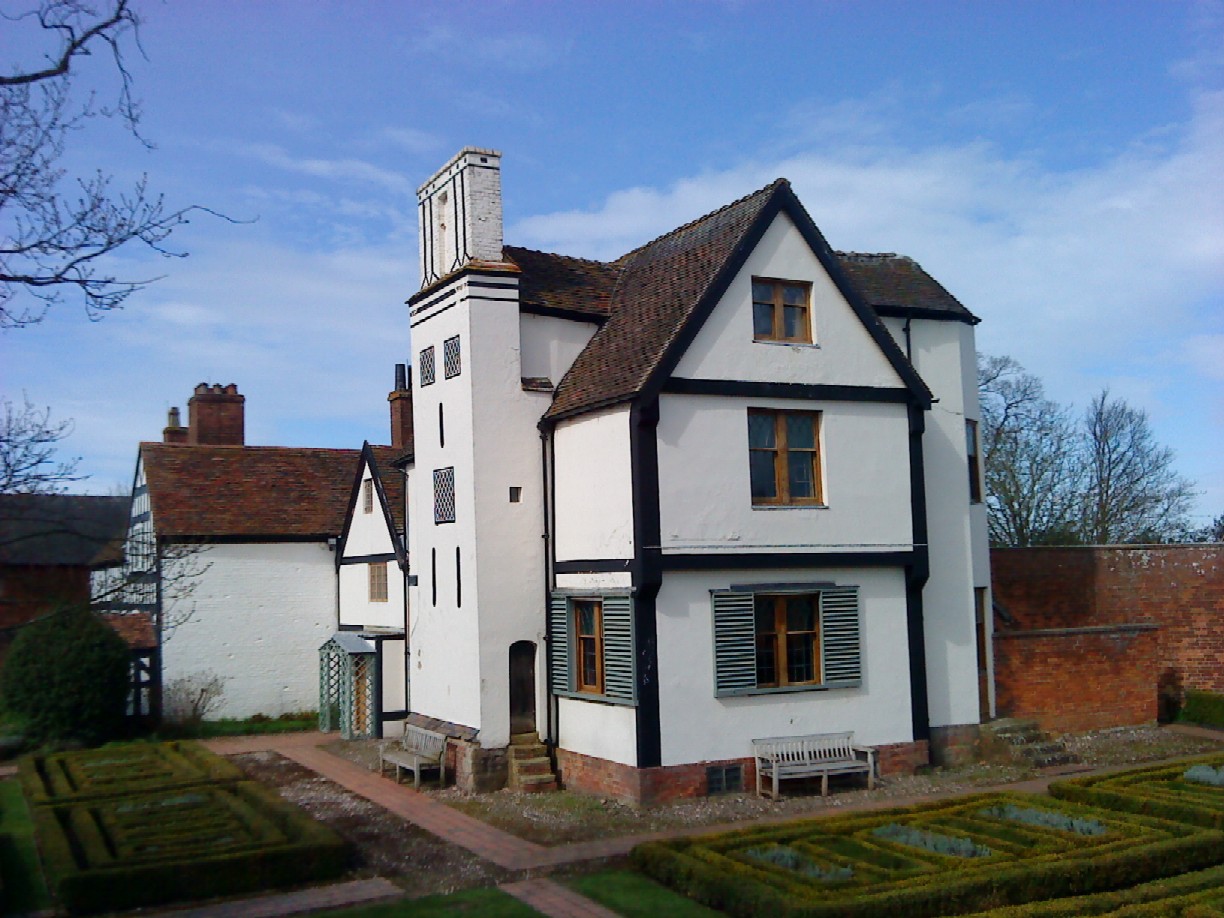


Without signs Boscobel would be difficult to find today so during the 17th century you would have thought that Charles would be relatively safe. Even so Parliament forces still came within a whisker of capturing the future King. Charles sought refuse with the numerous Catholic families in the area; however these were naturally the first target for the pursing soldiers. The families faced the very real risk of death by simply helping Charles and in fact the descendents of his helpers, the Pendrell family, still receive a small pension from the State as a reward for their loyalty - such was the risk. Although the house and surrounding vicinity have changed over the years, it is still easy to picture the events that took place here in 1651.

The attic -the priest hole where Charles hid is directly under the window.


The property is now looked after by English Heritage and the guides (one of whom is a spitting image of John Cleese) give detailed and very informative tours pointing out features normally overlooked if you wondered around alone, including several priest holes. One of these hiding positions is located in the attic were it is known that Charles actually stayed.

Son and Grandson of the Royal Oak


Close up view of the older, badly damaged, oak.


The famous oak stood in a nearby a field. Reportedly Parliament troops passed right underneath the tree during the night but the fugitives remained hidden from view. The tree seen today is the offspring of the original as that was killed off by storm damage and souvenir hunters. Another oak now stands, more or less isolated, in the same area although in the 17th C it would have been part of a large forest. Yet another tree nearby is an offshoot taken from the second oak (therefore the grandson of the original?) and was actually planted by the current Prince Charles.

Interestingly, even today this event is still remembered in a particular British way. If you’ve ever drank in any pub named the Royal Oak this harks directly back to Charles’s adventure at Boscobel.

Eight ships called the Royal Oak have served in the Royal Navy, including one that was sunk by a German submarine at Scapa Flow during the Great War.

If you want, it is possibly to do a mini re-enactment of the journey of Charles II through the midlands, as there are several other sites associated with the escape. One,White Ladies Priory, is down the road from Boscobel but very little of this remains and is only worth seeing if you are a die-hard fan of the story. Another house used of Charles is nearby. Moseley Old Hall is an Elizabethan property owned by the National Trust just a few miles to the south east. Charles later recalled that he watched his Scottish soldiers retreating back along the ‘main’ road towards the north from the defeat at Worcester from an upper window. It’s still very evocative site looking down towards the narrow country lane.

If you fancy something a little more modern then RAF Museum Cosford is also nearby. It is worth visiting to see the excellent Cold War display.

Wednesday, 12 May 2010

Powick Bridge, Worcester

In one of those strange quirks of history Powick Bridge, located just south of Worcester city centre, saw the first and last real military actions of the English Civil War. A similar event took place in the small Belgium village of Casteau where the 4th Dragoon Guards fired the first and last shots of the Great War for the British Army.

The first engagement, the battle of Powick Bridge in September 1642, was more of a cavalry skirmish. Prince Rupert troops chanced until the Parliament camp in the fields around this part of the river Teme and successfully drove off their cavalry. This enhanced the reputation of the Royalist cavalry of being nearly invincible which they enjoyed until the Cromwell’s Ironsides eventually turned up.

Almost exactly nine years later, in 1651, at the Battle of Worcester the bridge was heavy defended by Highland Scottish troops. These were later outflanked when Parliament forces used fords and a pontoon bridge to gain access to the north of the river.

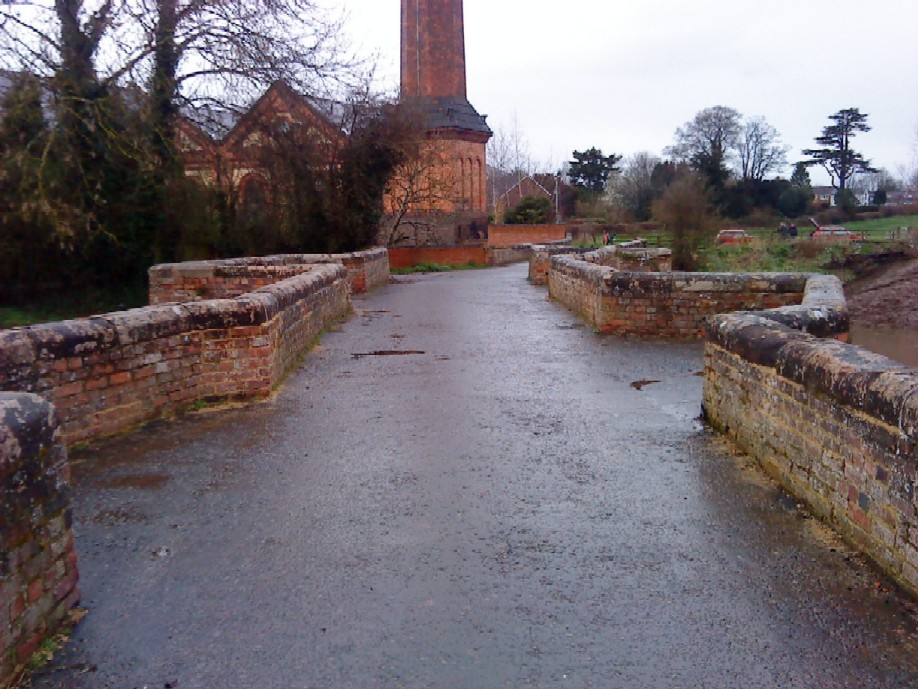
It was during this later period that the two arches closest the further bank (in the image below) were destroyed. At the time of the battle the river could still be crossed using planks linking up over the remains of the abutments. The arches were later rebuilt but in the different style and are now obvious to spot.

Powick Bridge looking north towards Worcester. The large brick building in the background is a former mill that later became the world’s first combined steam/hydro electric power station during the Victorian period.
View on the bridge looking north showing the just how narrow the structure is.


Same spot as above looking back towards Powick village and the 'road' to Great Malvern to the south. This gives a good impression of the type of hedgerows that were so hard fought over during the later battle of Worcester.


As the radical preacher Hugh Peters poignantly said, "When your wives and children shall ask where you have been, and what news, say you have been at Worcester, where England's sorrows began, and where they happily ended."

It is definitely worth the slight detour out of Worcester (previous visit detailed here) to visit Powick, the location of one of the true turning points in British (and it could be argued, world) history.

Saturday, 1 May 2010

More ECW Covenanters WIP

Quick update on my usual slow progress of my regiment of Renegade Covenanters. These are all of the infantry including these now completed pikemen figures. April has been taken up mainly by socialising and sightseeing, including visiting numerous sites linked to the English Civil War, of which I hope to post up images as soon as.

I'm quite pleased with the subdued colours and a few of the understated tartans which I believe is more in keeping with the Covenanter background. I've also added Woodlan Scenics' Flowering follage Purple (F177) on a number of bases to hopefully give the impression of heather.
For some reason I seem to have developed painters block regarding the two command groups that came with this box sets. So I've now started on a Perry ECW artillery piece until I can get my head round the other figures, as at the moment they don't 'look' right.

Apologies for the dodgy photographs, still coming to grips with the digital camera (especially the flash!).


Tuesday, 27 April 2010

Library bargains


I found myself in Dudley town centre a few weeks on a Saturday morning and as I had some spare time before the castle & zoo opened I visited the local library. My brother has, in the past, bought a number of historical books from there as they tend to sell off old stock i.e. old Haynes car manuals and romantic novels (same thing really). However if you’re prepared to rummage then you can pick to a few interesting titles. In a small reading room there’s a sign stating that it’s a pound for as many books per bag (you have to bring your own bag).

I bought the following (all for one English pound – bargain!).

‘Life and Times of Richard I’ – John Gillingham

‘Richard the Lionheart’ (second edition) - John Gillingham

‘Richard III’ - Charles Ross

‘Henry V as Warlord’ – Desmond Seward

‘The Roundheads’ – Jasper Ridley

I even popped out to get a plastic bag from WHSmith so that bumped up the overall price to £1.01. I had to leave two other books as I don’t think the bag could take the strain. I’ve only managed to read ‘The Roundheads’ book so far. This deals with the main Parliament (obviously) characters involved in the conflicts of the ECW, their actions during the commonwealth and their lives after the restoration.

In particular there is a fascinating account of John Lambert; a tragic character who after being judged by his former colleagues spent decades in prison slowly going mad. Another character detailed is Admiral Blake, who, I have to admit I’d never heard of. Blake was one of the most successful military leaders, naval or otherwise, in British history. It’s definitely worth popping into your local library even if just to read the Saturday papers for free and you might even pick up a bargain or two.

Thursday, 1 April 2010

English Civil War Army on parade

I spent some of the previous evenings setting up all the ECW figures I have (and there were far more than I imagined, especially cavalry). There is a method to this madness. I can now work out how the group the figures together and reduce as much repetition as possible. It also gives me a good idea just how long it will take me to paint this lot (at least a year I reckon). Hopefully they will be done before:
a) I go mad,
b) I am declared bankrupt for buying too many toy soldiers (I doubt my bank manager, Trevor, quite understands what a 'lead/plastic mountain' is),
c) my eyesight fails,
d) all of the above.


This image doesn't even show my Newcastle figures or the frame gun.

The black primed figures are Warlord Games. The rest are a mixture of Renegade, Bicorne, Essex and Perry. There is a surprising difference in size with the figures for what is supposedly the same scale. For example Bicorne & Renegade Miniatures are both considerable taller than their Warlord and Perry companions. However as long as I don't place these figures on the same bases I don't think it's a major issue. After all you could easily play with just the bases but it certainly wouldn't look as pretty and from a few feet away it's hard to see the difference.

March Review

March has been quite an interesting month for me involving several enjoyable days out. First up was a trip to the east midlands. This started with a visit to an open day held to promote the new Black Powder rules at Maelstrom Games in Mansfield. The premises are still ‘work in progress’ with the shop under the main playing room. One of the two adjacent buildings are used as a stock room, the other appears as if it will be used it as an additional playing area.

The products on display are available with a decent discount of 10-15% although this isn’t immediately obvious as they do not have any prices on the items.

The distance to the shop, just over 55 miles away, means that I won’t be able to regularly visit though my friend recommends their mail order service after placing, and quickly receiving, a large order with a considerable discount.

I can’t comment of the new Black Powder rules as I didn’t manage to play but it’s always nice to be able to put names to faces regarding the Warlord Games staff. My accompanying friends are more into Warhammer Fantasy so we ventured south towards Warhammer World, the headquarters of Games Workshop (GW) in Nottingham. Located on an industrial estate, the showrooms and playing areas are based in a factory unit. The painted miniatures on display are definitely worth seeing. There is a shop on site where we were ‘mugged’ three times in ten minutes by the professionally over friendly staff,

“So what army are you working on?”

“Err.. exactly the same one I just told those two blokes about”.

I didn’t say this obviously as I’m far too polite. It’s apparent that there are stock phases taught to GW staff during their training. Another method seems to be placing the appropriate product in your hands - think of the opposite of when your mom used to remove sweets you sneakily placed in the shopping trolley hoping she wouldn’t notice until you arrived at the till. Clever Jedi mind tricks but a little tiresome after awhile.
I was a little surprised that the shop doesn’t have the complete range available on display; although they are available on request if you’re prepared to wait. A missed opportunity I would have thought from such a commercially focused operation like GW. After mentioning where we'd been earlier one staff member admitted that Maelstrom offer cheaper prices than normal but then quickly added that Maelstrom don't carry a full range of stock (just like their own shop then).

Also in March was the WMMS show organised by Alumwell Wargamers which is probably the biggest show of its type in the West Midlands. In attendance were my local club, Pensnett, which is a ‘proper’ old fashioned modelling club (in the sense of making plastic model kits, scratch building and painting large scale figures). With my limited finances I still managed to spend about £70, including renewed membership of the Lance & Longbow Society. Main purchases consisted of metal Perry miniatures from their EWC and new WotR ranges. A highlight of the show was a game put on by the Leamington Spa Wargamers group. This was an impressive Elizabethan game based on the film ‘Where Eagles Dare’. Trust me; it made sense when you saw it. They deservedly won the "Best Painted Army" at the show.

Managed to paint twenty figures and finish the star fort I made last year. I also did a lot of prep work on numerous other figures but I think I need to focus and paint more regularly. Another post about my ECW efforts will be posted shortly.

Saturday, 13 March 2010

ECW Covenanters WIP

"Does exactly what is says on the tin."

Just a few images of the miniatures I'm currently working on. These are from Renegade Miniatures - ECW Infantry Standing/Ready Regiment Covenanters 01.
8 down, 24 to go.