Wednesday, 16 June 2010

ECW Covenanter Command Group

After what seems an age, I've finally completed these figures from Renegade. After painting them I looked through my growing collection of ECW flags for a suitable match. Spotting 'COV 9 - DUKE OF HAMILTON'S REGIMENT' by Body Banners from Redoubt Enterprises, I decided to use these with this set which I'd picked up at the Derby Wargaming Show back in October of last year. I saw the Hamilton description and assumed it was for the William Hamilton, 2nd Duke of Hamilton who died during the battle of Worcester, although after checking their website I realised that they actually represent the flags of his equally ill-fated older brother General Sir James Hamilton 1st Duke of Hamilton. I can only assume that his brother would have carried a similar (if not the same) flag.
 
As I normally prepare flags on a spare spear/pike this has allowed me to swap and change the various flags I have. In the following images I have used flags taken from the following site Dux Homunculorum.

The Covenanter flags are designed and drawn by Alan to suit his 1/72 scale figures but I think they work perfectly for 1/56 (28mm) scale and, more importantly, they're free - bargain! They are easily as good, if not even better, as several others I have bought. There are more available on the site so it's definitely worth having a look.

"It may have been the colour of Colonel Sir Alexander Sutherland."


"Another ensign captured at Preston in 1648. This was the Colonel's colour for Lord Cranston's Regiment of Foot (the Edinburgh Levies)." Coincidently this is the same battle where James, the 1st Duke of Hamilton, was heavily defeated and later captured. 


Unfortunately the 15th Duke, Angus Alan Douglas-Hamilton, died on the 5th June 2010 at at the age of 71. His son, Alexander Douglas-Hamilton, now becomes the 16th Duke.

Monday, 14 June 2010

Naseby

This day in history - Battle of Naseby 14th June 1645


Looking north across Broadmoor from the Parliament positions (location of battlefield monument).

Tuesday, 1 June 2010

Lord Dudley's Banner

After a recent trip to Tewkesbury I have been slightly distracted from one civil war to another, this time it’s the Wars of the Roses (WotR). The figure shown below is carrying the banner (heraldic flag) of John Sutton of Dudley; Lord Dudley to his friends. One of the more influential men in the in the mid/late 15th century Sutton is now largely ignored or forgotten outside of those interested in Dudley’s medieval history but I’ll post a more detailed account of Lord Dudley’s life once I have completed the unit.


I’ve had a long interest in the period (probably dating back to a classic Ladybird book on Warwick the Kingmaker I had as a child) so I was delighted when Perry’s announced their WotR plastic range. I immediately bought three boxes on their release late last year but I hadn’t planned to paint any just yet.

This figure has been standing on my desk for a while, challenging me to paint it. I started by block painting with GW Chainmail, then out of curiosity I used GW Asurmen Blue as the main wash rather than black. I used Badab Black wash for just the mail areas. The figure’s highlights where then picked out with Mithril Silver.

The original arm held a sword but I removed this and replaced it with a warhammer. The weapon is taken from the Warlord Games plastic Civil War cavalry set.

The flag is from ‘WRF 30 Flags, Lancastrian, Lords and Knight Blore Heath’ by Freezywater flags (available from Vexillia Limited) which I purchased from those nice chaps at the Lance and Longbow Society stand at the Alumwell wargames show (WMMS) way back in March (blimey, this year is really flying by!). The flag itself is printed in two plain colours so if you want high/low-lights then you're going to have to paint them yourself.

If you are ever in Warwick then be sure to visit the church of St. Mary’s to see the Beauchamp Chantry, it is probably the finest medieval chapel in England. I only mention this because if you look up at the south wall of the chapel you will notice several flags hanging above the tombs there. Amongst these is the distinctive flag of Lord Dudley – the same two tailed green lion rampant on a yellow background as shown here (Or a lion rampant double queued vert). To me it always appears to be relatively old fashioned for the late 15th century, compared to others, but the livery colours of green and yellow would certainly have been eye catching.

Thursday, 27 May 2010

Scots Civil War Ordnance

After experiencing a creative block painting previous figures I decided to switch to something slightly different. As I have family connections to the Royal Artillery and Royal Engineers (hence the blog title) I'm always drawn to field pieces and other heavy equipment. Following a swift rummage through a few boxes I chose to paint this artillery set from Perry Miniatures.

As the other Scots I've already painted look quite dour and miserable I thought I’d introduce some colour with this gun and crew, therefore the red carriage ("Finally.." I hear you cry, "he's actually painted something!").


The gunner is based on the main figure shown in Plate 25 of Haythornwaite's excellent ECW book showing Royalist artillery. The matrosses have been painted to compliment the other northern forces already completed.

The barrel is from Renedra (the toolmakers used by Perry's, Warlord etc). I added greenstuff to replicate the leather lining which could be draw together; the barrel is also painted to show it banded with rope rather than iron.

I purchased this artillery piece from a show last year. The box label said it is a Falcon (9 pounder gun) plus crew - (SW19) from Scots of the Civil War 1639 - 1652 range. However looking through my large ECW lead pile I noticed that the gun and carriage are exactly the same as another Perry box I'd bought previously, Culverin (12 pounder gun) plus crew - (ECW13) English Civil War range. It's no big deal really, just thought I'd mention it.

I'm not certain the bronze colour looks right (i.e. like bronze), it's painted with GW Dwarf Bronze shaded with GW Flesh and Mud washes; comments and thoughts are welcome.

Next up should be the command group stands for the Renegade Covenanters but as usual progress is slow - four down, four to go.

Thursday, 13 May 2010

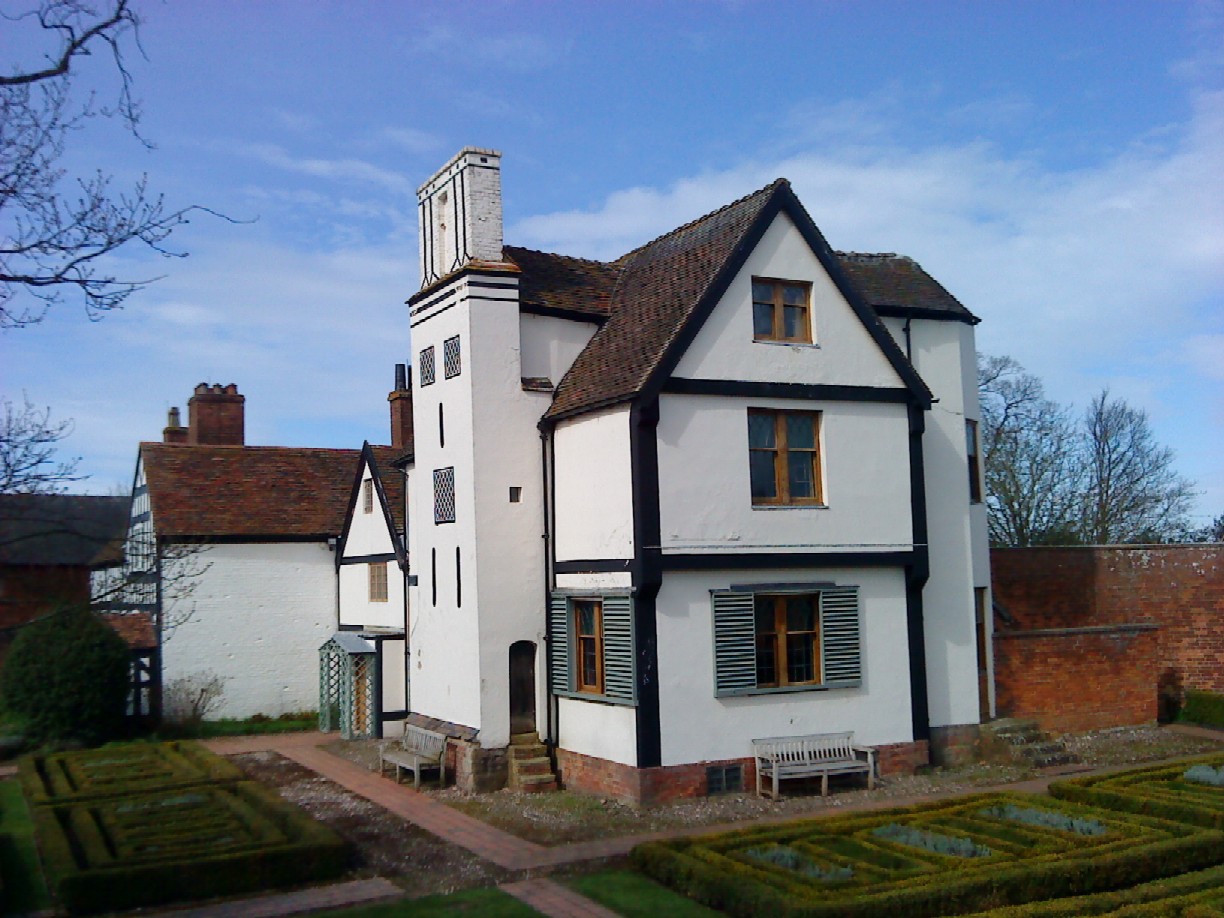
Boscobel House

Following on from the previous post regarding Powick Bridge, the defeat at Worcester in 1651 saw Charles begin his long journey into exile and eventual safety. One of the better known episodes on this voyage was the night Charles spent hiding up an oak tree.

This event took place at Boscobel (meaning 'beautiful wood') which lies in the Shropshire/Staffordshire border (literally, the house itself is in Shropshire and grounds are in the county of Staffordshire).


Without signs Boscobel would be difficult to find today so during the 17th century you would have thought that Charles would be relatively safe. Even so Parliament forces still came within a whisker of capturing the future King. Charles sought refuse with the numerous Catholic families in the area; however these were naturally the first target for the pursing soldiers. The families faced the very real risk of death by simply helping Charles and in fact the descendents of his helpers, the Pendrell family, still receive a small pension from the State as a reward for their loyalty - such was the risk. Although the house and surrounding vicinity have changed over the years, it is still easy to picture the events that took place here in 1651.

The attic -the priest hole where Charles hid is directly under the window.


The property is now looked after by English Heritage and the guides (one of whom is a spitting image of John Cleese) give detailed and very informative tours pointing out features normally overlooked if you wondered around alone, including several priest holes. One of these hiding positions is located in the attic were it is known that Charles actually stayed.

Son and Grandson of the Royal Oak


Close up view of the older, badly damaged, oak.


The famous oak stood in a nearby a field. Reportedly Parliament troops passed right underneath the tree during the night but the fugitives remained hidden from view. The tree seen today is the offspring of the original as that was killed off by storm damage and souvenir hunters. Another oak now stands, more or less isolated, in the same area although in the 17th C it would have been part of a large forest. Yet another tree nearby is an offshoot taken from the second oak (therefore the grandson of the original?) and was actually planted by the current Prince Charles.

Interestingly, even today this event is still remembered in a particular British way. If you’ve ever drank in any pub named the Royal Oak this harks directly back to Charles’s adventure at Boscobel.

Eight ships called the Royal Oak have served in the Royal Navy, including one that was sunk by a German submarine at Scapa Flow during the Great War.

If you want, it is possibly to do a mini re-enactment of the journey of Charles II through the midlands, as there are several other sites associated with the escape. One,White Ladies Priory, is down the road from Boscobel but very little of this remains and is only worth seeing if you are a die-hard fan of the story. Another house used of Charles is nearby. Moseley Old Hall is an Elizabethan property owned by the National Trust just a few miles to the south east. Charles later recalled that he watched his Scottish soldiers retreating back along the ‘main’ road towards the north from the defeat at Worcester from an upper window. It’s still very evocative site looking down towards the narrow country lane.

If you fancy something a little more modern then RAF Museum Cosford is also nearby. It is worth visiting to see the excellent Cold War display.

Wednesday, 12 May 2010

Powick Bridge, Worcester

In one of those strange quirks of history Powick Bridge, located just south of Worcester city centre, saw the first and last real military actions of the English Civil War. A similar event took place in the small Belgium village of Casteau where the 4th Dragoon Guards fired the first and last shots of the Great War for the British Army.

The first engagement, the battle of Powick Bridge in September 1642, was more of a cavalry skirmish. Prince Rupert troops chanced until the Parliament camp in the fields around this part of the river Teme and successfully drove off their cavalry. This enhanced the reputation of the Royalist cavalry of being nearly invincible which they enjoyed until the Cromwell’s Ironsides eventually turned up.

Almost exactly nine years later, in 1651, at the Battle of Worcester the bridge was heavy defended by Highland Scottish troops. These were later outflanked when Parliament forces used fords and a pontoon bridge to gain access to the north of the river.

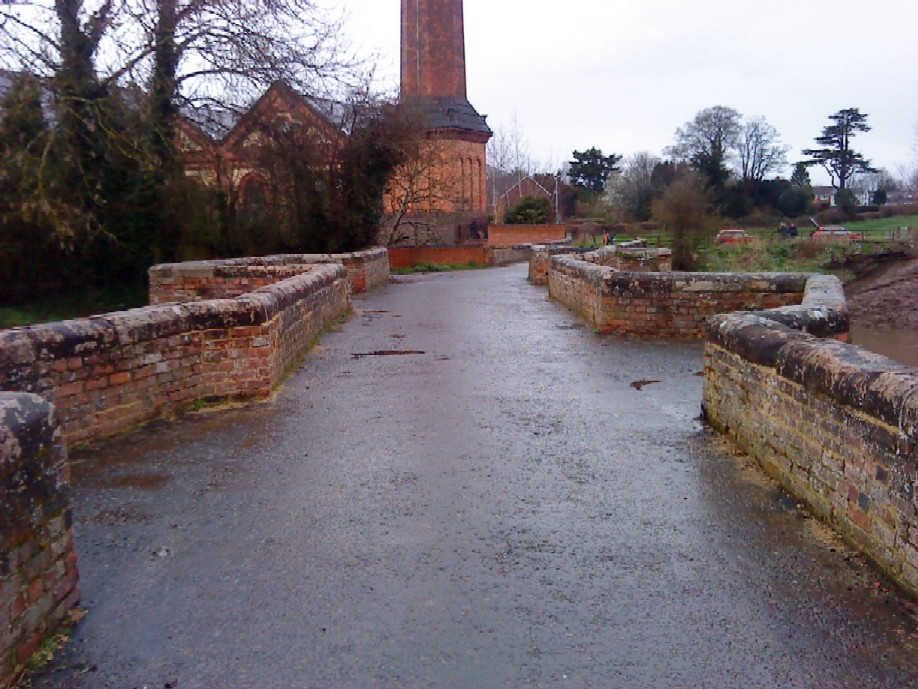
It was during this later period that the two arches closest the further bank (in the image below) were destroyed. At the time of the battle the river could still be crossed using planks linking up over the remains of the abutments. The arches were later rebuilt but in the different style and are now obvious to spot.

Powick Bridge looking north towards Worcester. The large brick building in the background is a former mill that later became the world’s first combined steam/hydro electric power station during the Victorian period.
View on the bridge looking north showing the just how narrow the structure is.


Same spot as above looking back towards Powick village and the 'road' to Great Malvern to the south. This gives a good impression of the type of hedgerows that were so hard fought over during the later battle of Worcester.


As the radical preacher Hugh Peters poignantly said, "When your wives and children shall ask where you have been, and what news, say you have been at Worcester, where England's sorrows began, and where they happily ended."

It is definitely worth the slight detour out of Worcester (previous visit detailed here) to visit Powick, the location of one of the true turning points in British (and it could be argued, world) history.

Saturday, 1 May 2010

More ECW Covenanters WIP

Quick update on my usual slow progress of my regiment of Renegade Covenanters. These are all of the infantry including these now completed pikemen figures. April has been taken up mainly by socialising and sightseeing, including visiting numerous sites linked to the English Civil War, of which I hope to post up images as soon as.

I'm quite pleased with the subdued colours and a few of the understated tartans which I believe is more in keeping with the Covenanter background. I've also added Woodlan Scenics' Flowering follage Purple (F177) on a number of bases to hopefully give the impression of heather.
For some reason I seem to have developed painters block regarding the two command groups that came with this box sets. So I've now started on a Perry ECW artillery piece until I can get my head round the other figures, as at the moment they don't 'look' right.

Apologies for the dodgy photographs, still coming to grips with the digital camera (especially the flash!).