Friday, 12 April 2013

Shropshire Model Show, RAF Museum Cosford 2013

Another year rolls by and once again it was time for the Shropshire Model Show, organised by the Shropshire Scale Modellers held at RAF Museum Cosford. Photos from last year's show can be seen here, here and here. A very enjoyable show enhanced by the fact its hosted at the museum so there's always plenty on models and exhibits to look at as you wonder round the site.

Purchases were again relatively modest, a few 1/48 WWII Soviet aircraft and not much else apart from a kit plus brushes etc. from the Airfix stand. It was interesting to see models not yet released (a 1/48 Gloster Javelin for instance).

My photographs are up (or more actually - down) to my usual standards when I remembered to take them.
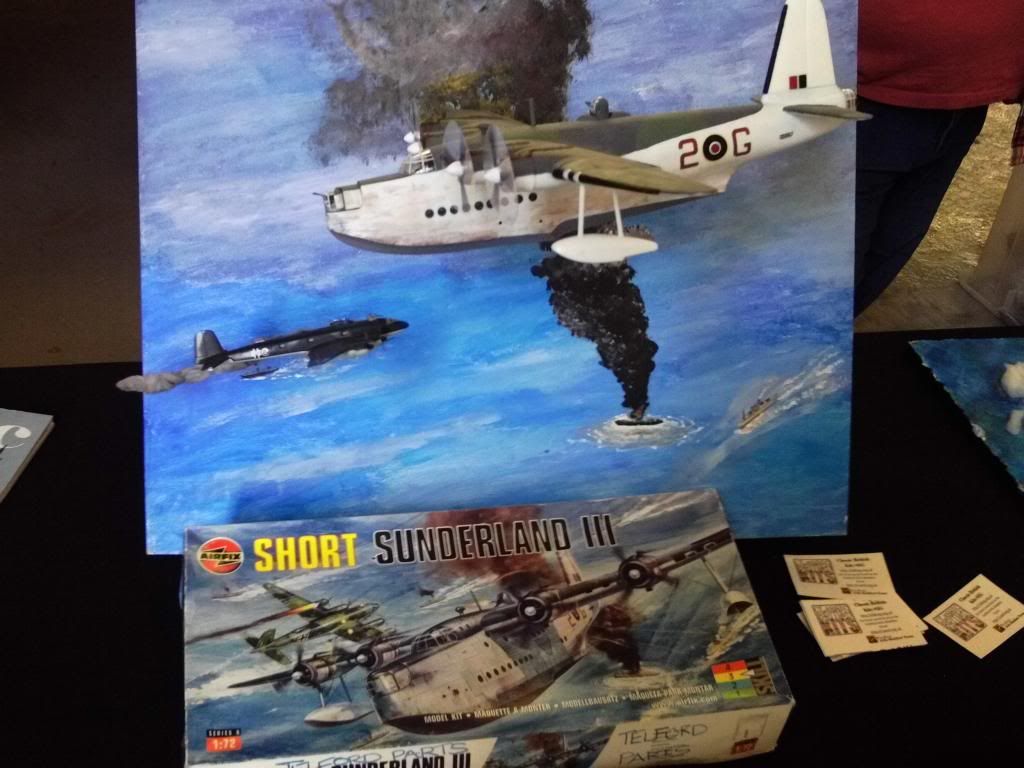
Airfix's Short Sunderland - Classic British Kits SIG

Airfix's Douglas Invader - Classic British Kits SIG 
 
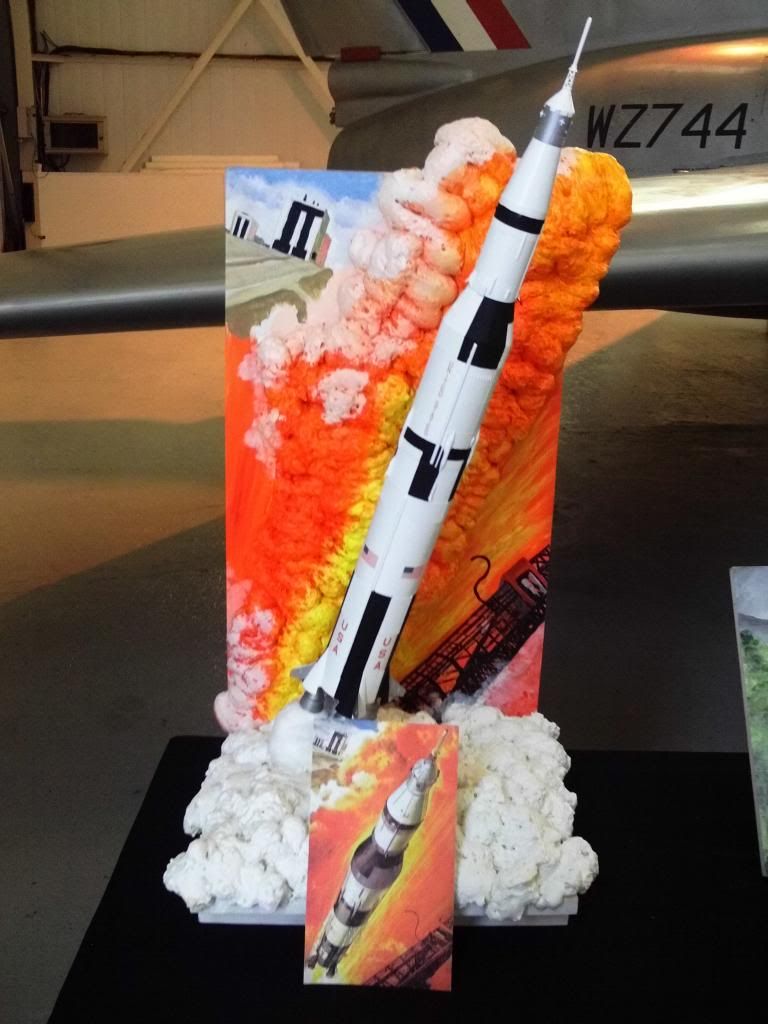
 Apollo
 
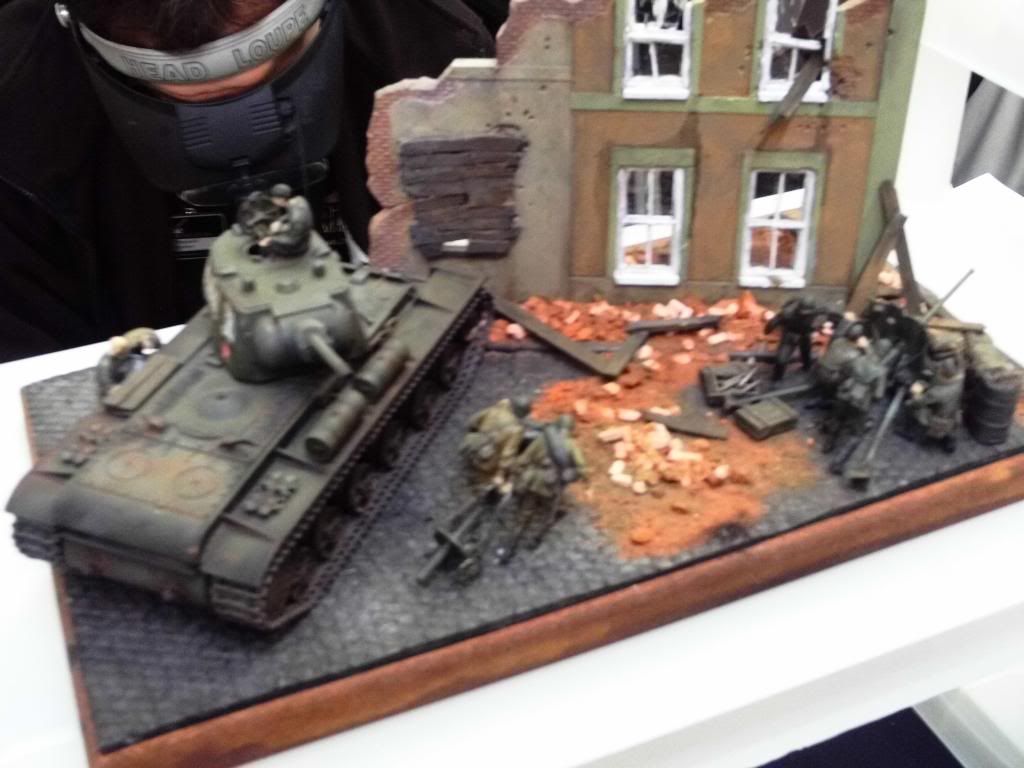
Soviet assault - Friends of Bovington (?)
 
Soviet assault - Friends of Bovington (?)


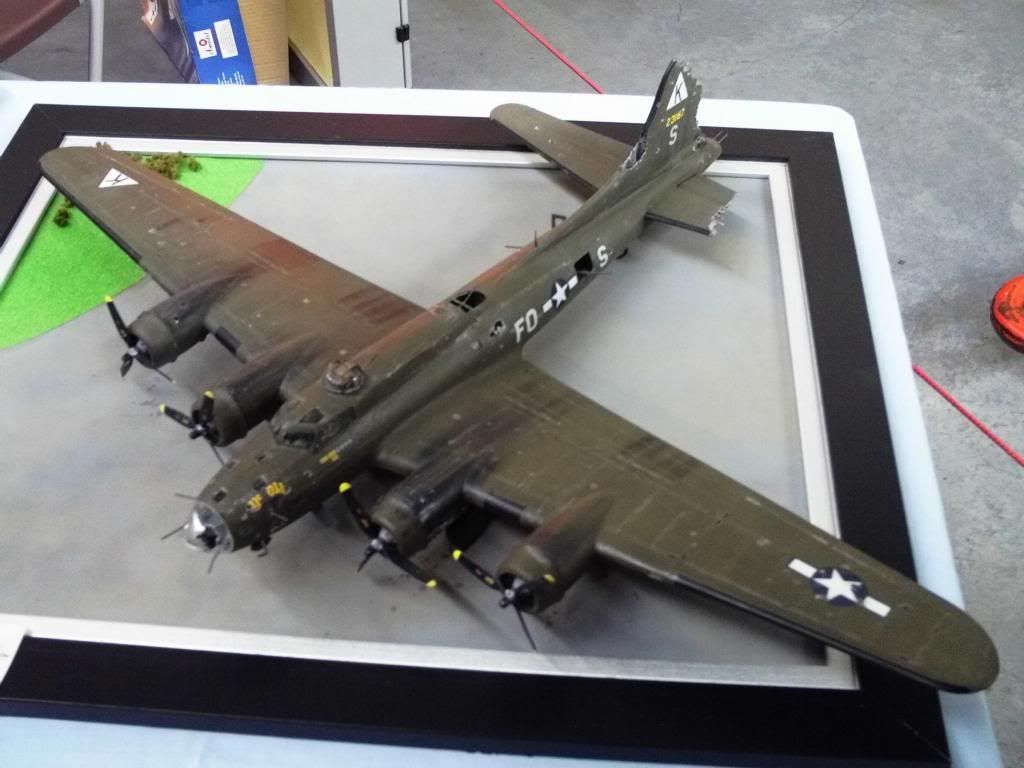
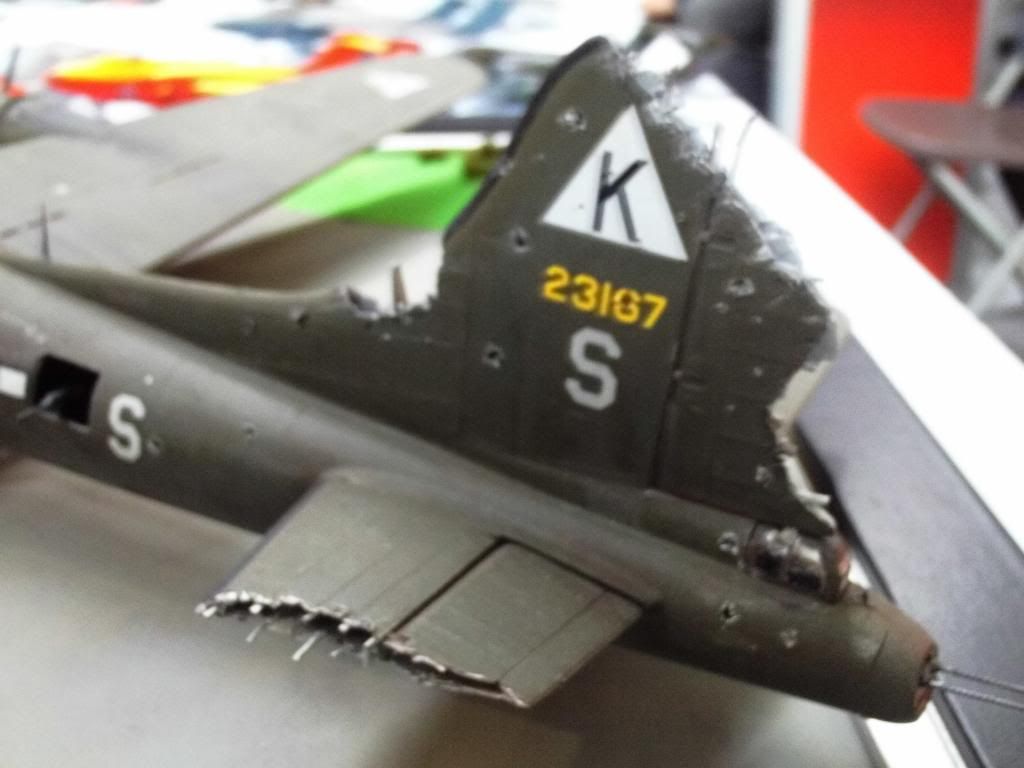
B-17F Flying Fortress 'Ye Olde Pub'. The remarkable true story of this plane can be found here.
 
B-17F Flying Fortress 'Ye Olde Pub'

B-17F Flying Fortress 'Ye Olde Pub'
 
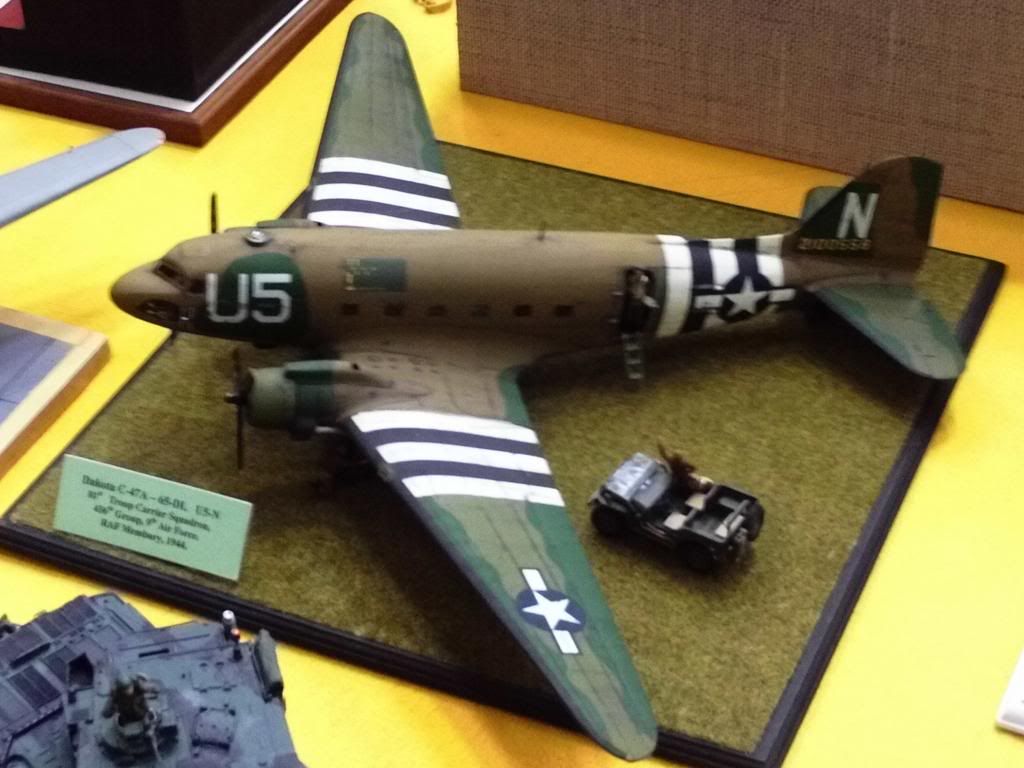
Dakota C-47A
 
Messerschmitt 109 - The Night Fighter S.I.G

Croatian Messerschmitt 109 - The Night Fighter S.I.G
 
 
Kawasaki Ki-45 KAI (Hasegawa kit) - The Night Fighter S.I.G
 
Heinkel He 219 Uhu ("Eagle-Owl") - The Night Fighter S.I.G

 Heinkel He 219 Uhu ("Eagle-Owl") - The Night Fighter S.I.G
 
Northrop P-61 Black Widow - The Night Fighter S.I.G

 
Northrop P-61 Black Widow - The Night Fighter S.I.G


Messerschmitt 109 - Quarter Scale Group (QSG)
 
Messerschmitt 109 - Quarter Scale Group (QSG)


Lockheed P-38G Lighting - Quarter Scale Group (QSG)
 
Lockheed P-38G Lighting - Quarter Scale Group (QSG)
 
 B-24D Liberator - Quarter Scale Group (QSG)
 
 B-24D Liberator detail - Quarter Scale Group (QSG)
 
Messerschmitt Bf 110 - Pensnett Model Makers Society

Messerschmitt Me 163 Komet - German's rocket-powered fighter aircraft.

Messerschmitt Me 163 Komet

Best of Show - Spitfire

Friday, 5 April 2013

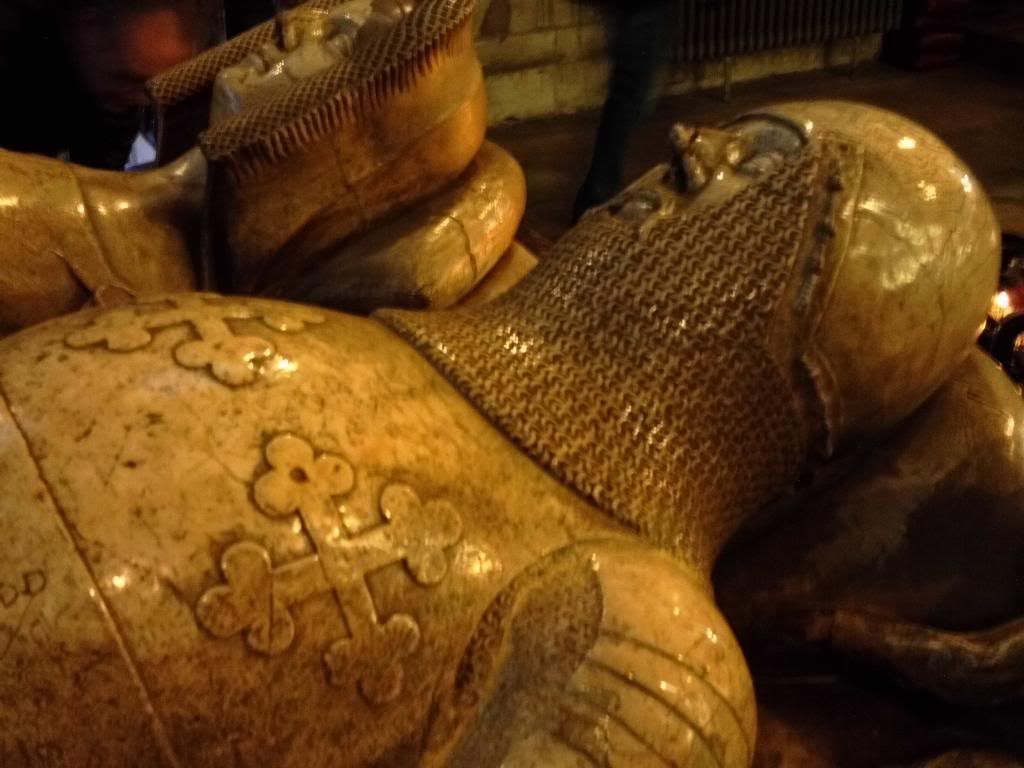
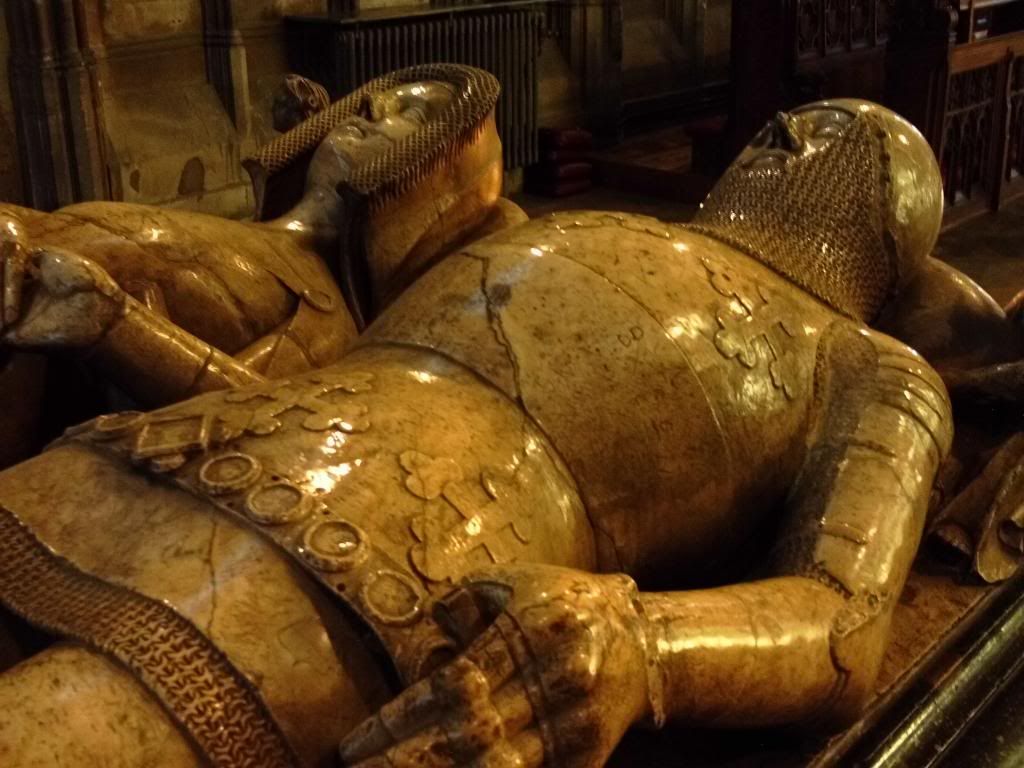
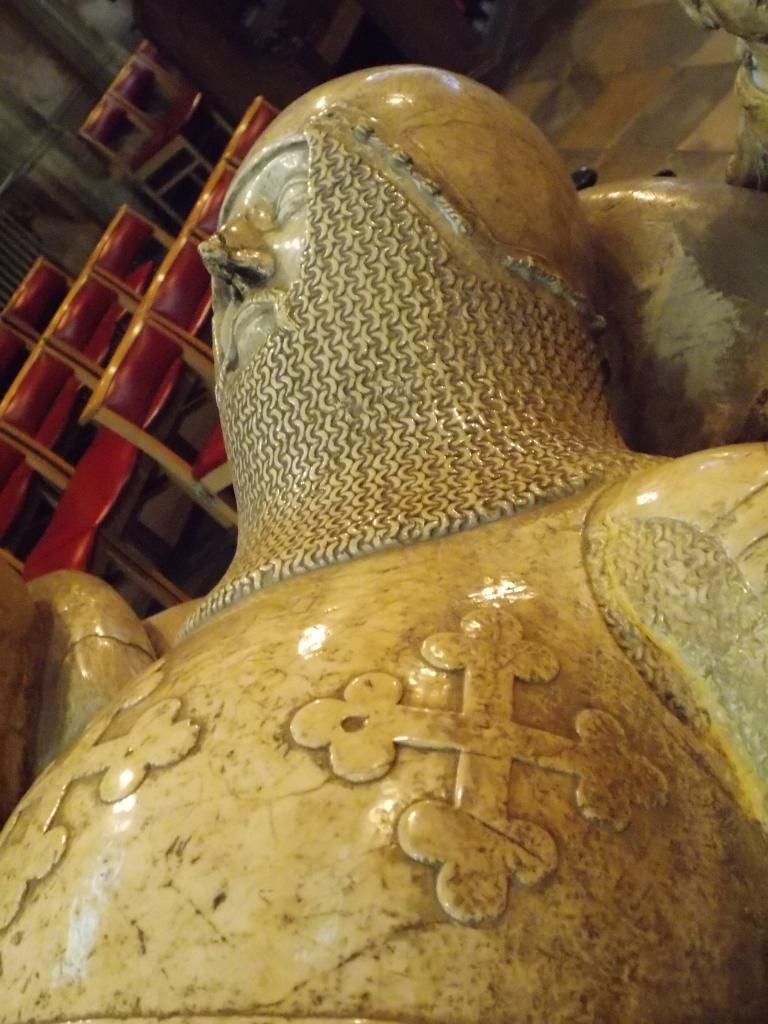
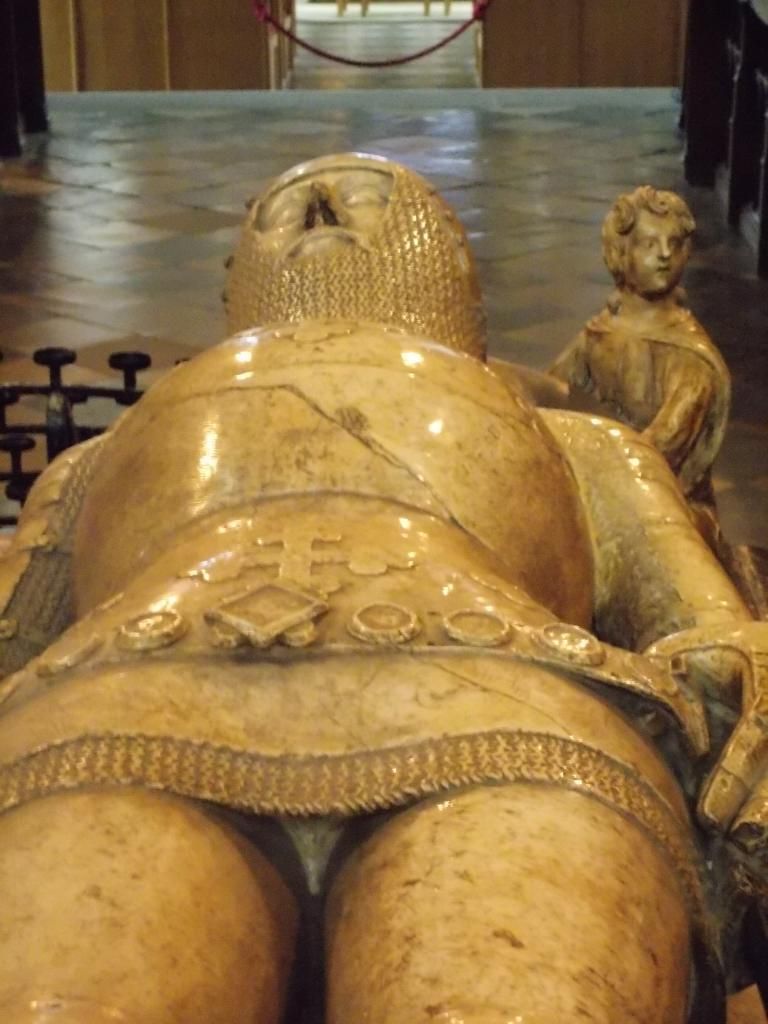
Richard Beauchamp, 13th Earl of Warwick

Richard Beauchamp, 13th Earl of Warwick
In the 'Wars of the Roses A Field Guide & Companion' author Peter Bramley states that the Beauchamp Chapel, Collegiate Church of Saint Mary in Warwick contains "probably the finest medieval non royal church monuments in England.." The chapel was built to house the remains of Richard Beauchamp, 13th Earl of Warwick, grandson of Thomas Beauchamp, 11th Earl of Warwick. As captain of Calais and Rouen, and the Custodian of Rouen Castle, he is perhaps best know for overseeing the trial and execution of Joan of Arc in 1431. As was the case with his grandfather, it was during the Hundred Years War that Richard Beauchamp (pronounced 'beach-um' not 'bow-champ' like I used to as a kid) made his fame and (further) fortune.
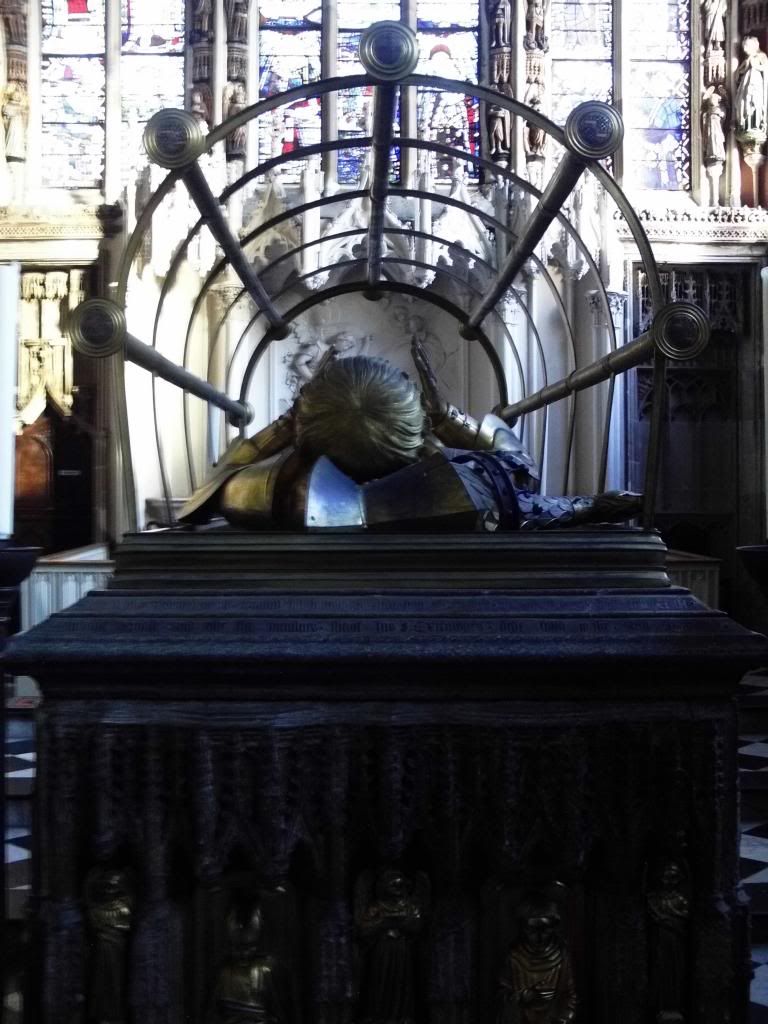
Beauchamp Chapel, Collegiate Church of Saint Mary, Warwick
Richard Beauchamp married into the Despencer family and fortune in 1422 becoming one of the richest men in the country.

Beauchamp had close personal connections with Henry V; in 1410 he was made a member of the royal council, and was Lord High Steward at the coronation of Henry V in 1413. He was present at the siege of Harfleur in 1415 and at Caen when it was sacked in 1417. When Henry V died in 1422, Beauchamp was appointed one of the councilors for the infant king Henry VI. He went on to capture Pontorson, Normandy in May 1426 where the garrison were massacred but he himself was later defeated at Montargis southeast of Paris by John, Bastard of Orleans. In 1428 Beauchamp was appointed and Guardian of Henry VI and was his tutor from 1428 - 1437.
 
Richard died in Rouen, Upper Normandy on 30th April 1439 probably worn out by the constant campaigning.
 
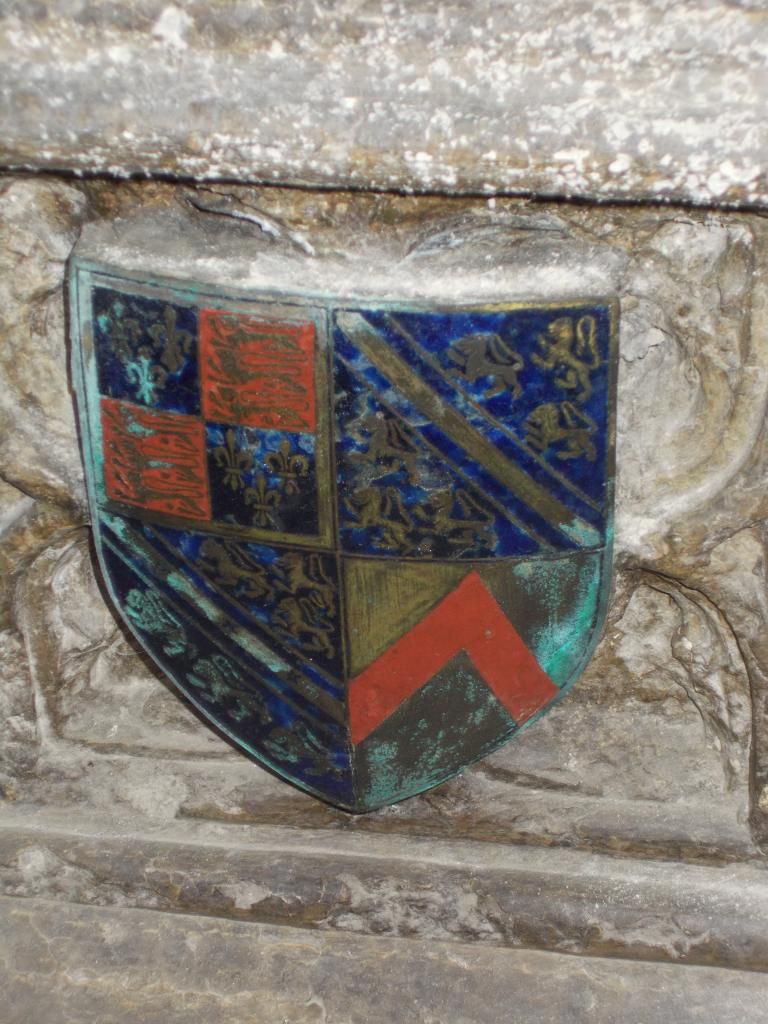
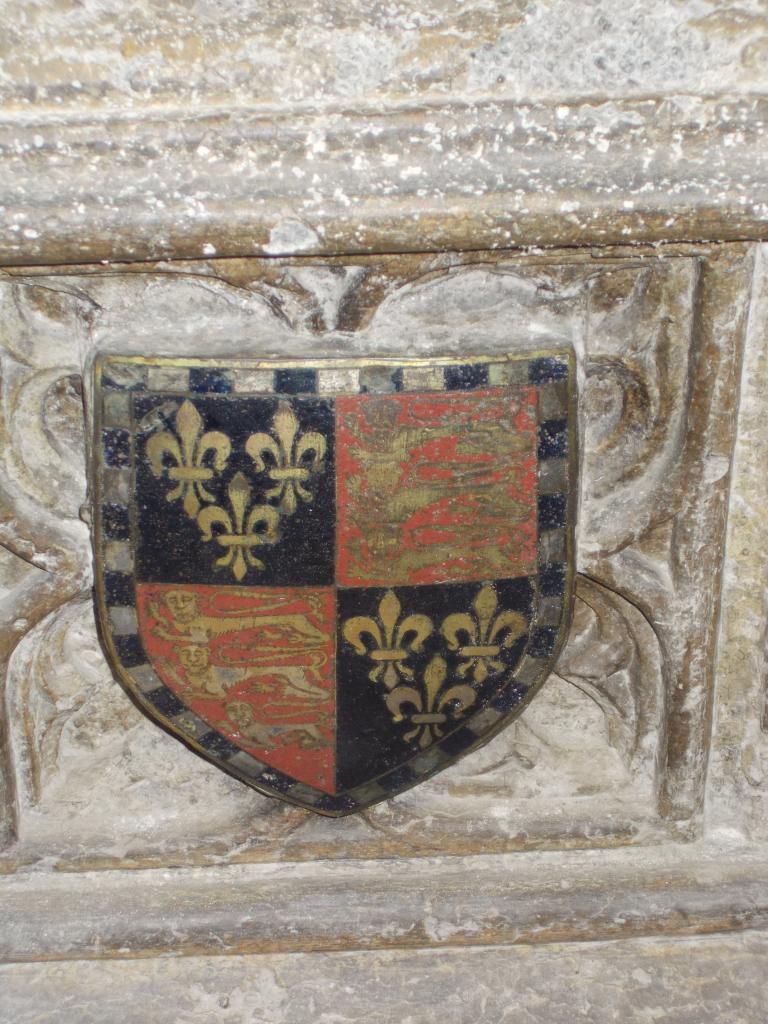
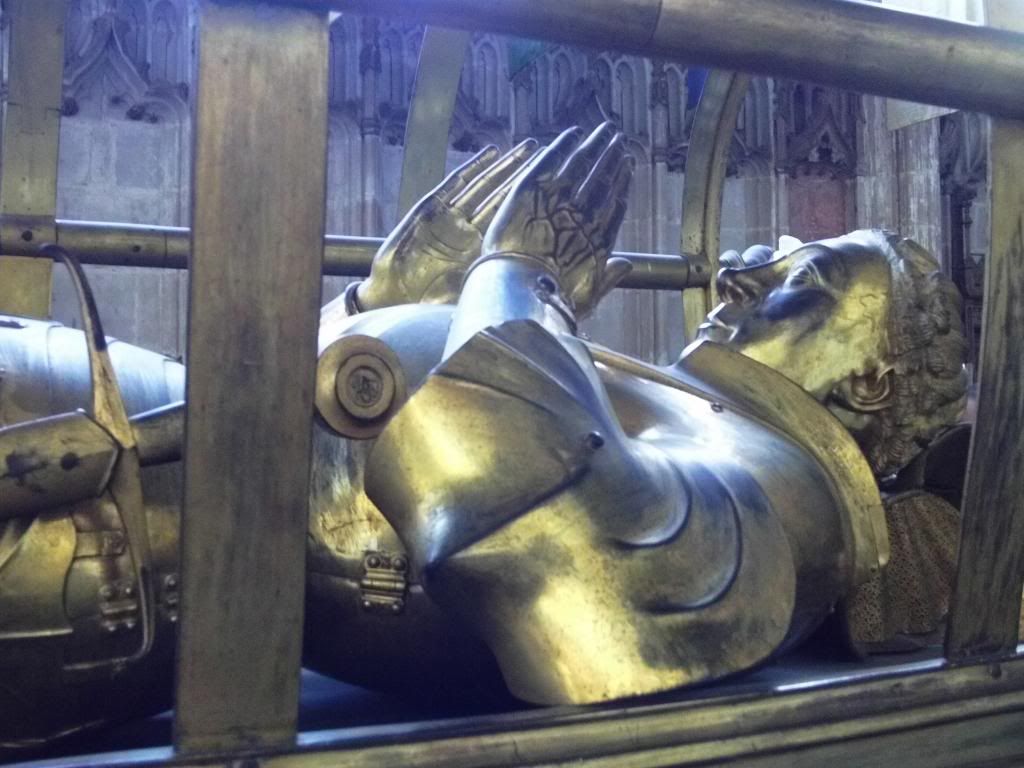
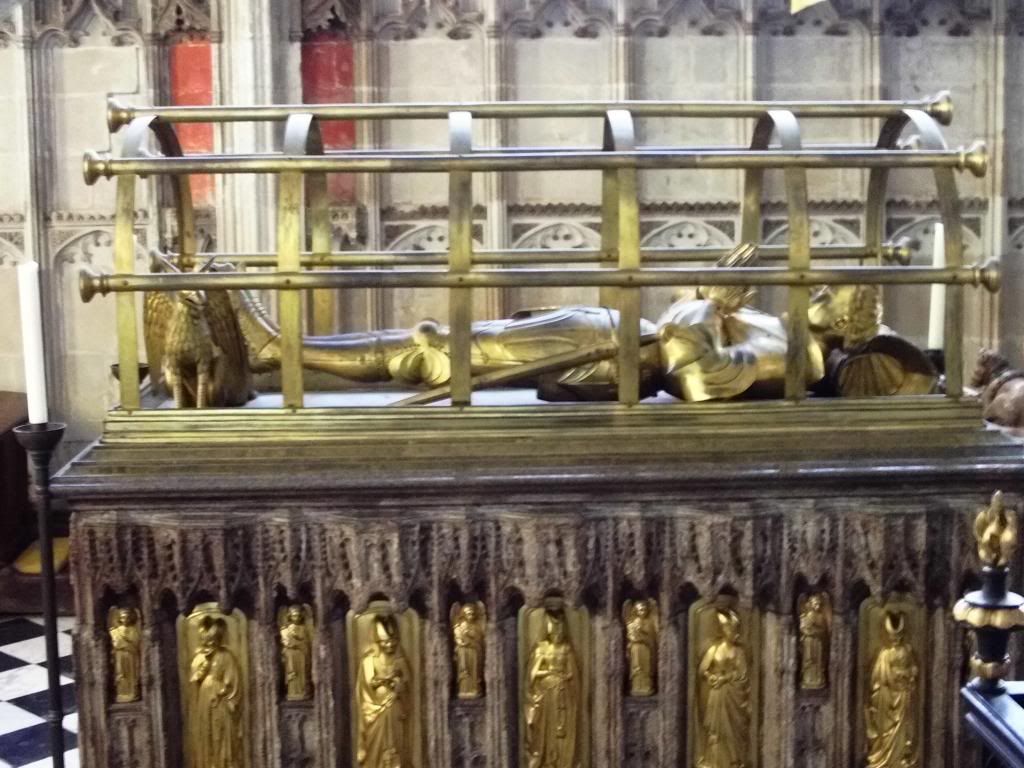
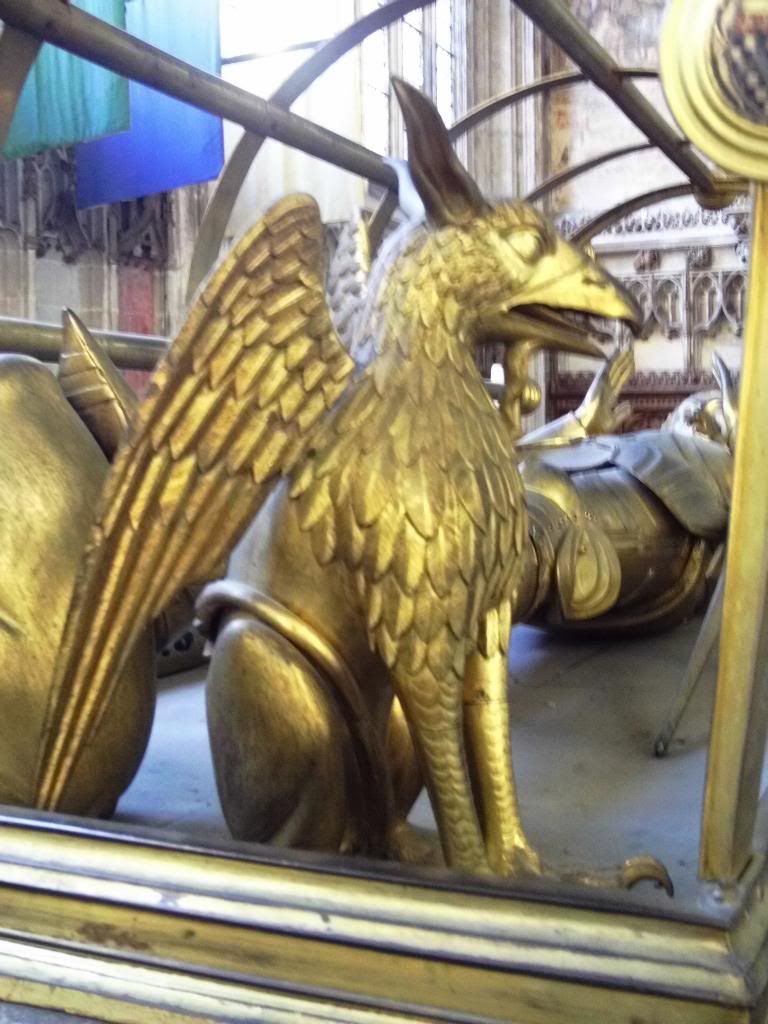
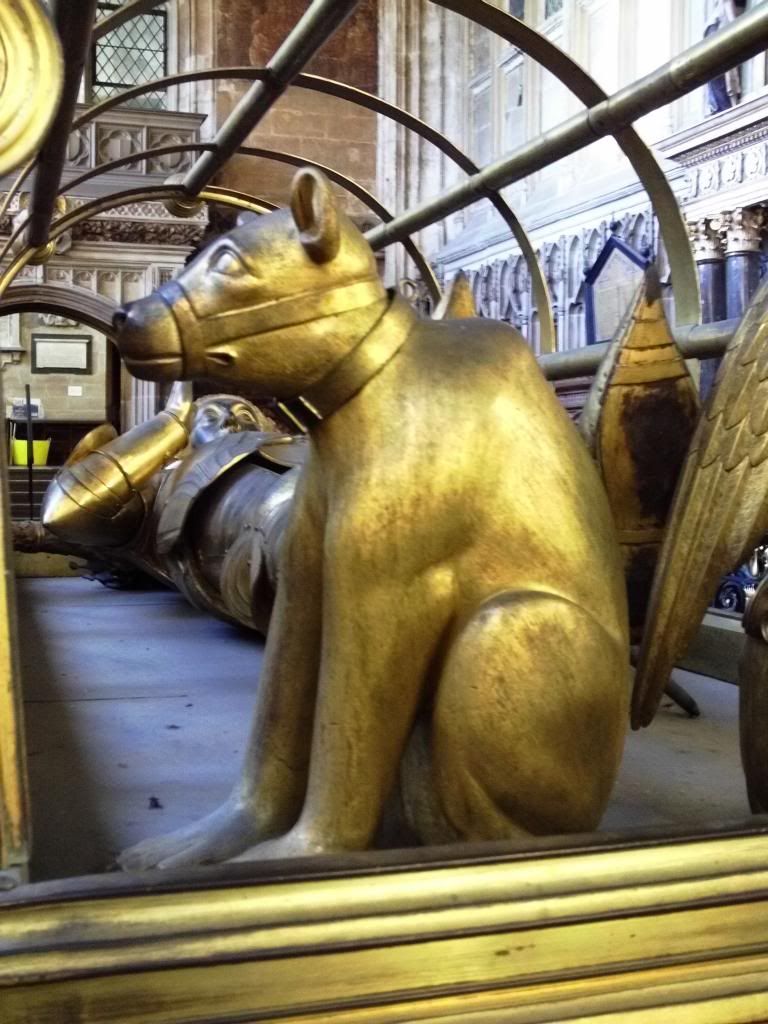
The combined tomb, effigy and hearse of the Earl is rightly the focal point of this impressive chantry chapel built according to directions left in his will. The shields on the tomb read like a who's who of medieval England. These include the family names of: Beauchamp, Newburgh, Clare, Despenser, Montagu, Monthermer, Neville, Bohun, Stafford, Talbot, Strange, Furnival and Latimer.
 
 
This is not however, as is often thought, the tomb of the famous 'Warwick the Kingmaker', Richard Neville was Beauchamp's son-in-law. Beauchamp's youngster daughter, Anne, married the War of the Roses powerbroker Neville in 1436 who at one stage held two Kings of England under his control, hence the nickname.
 
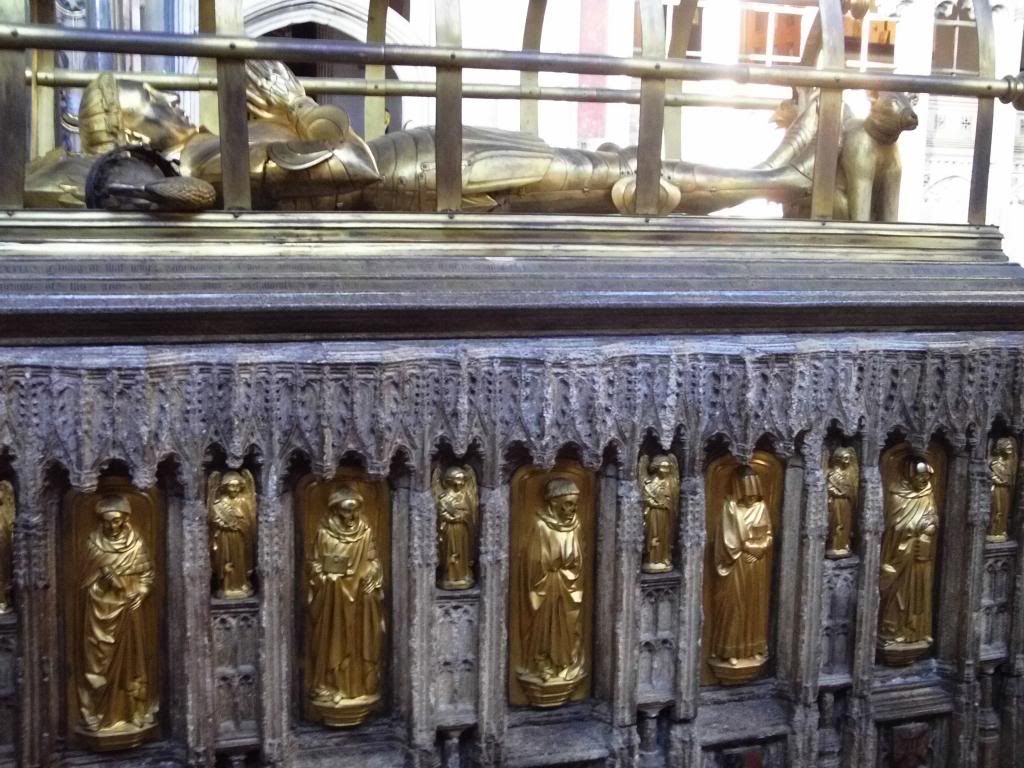
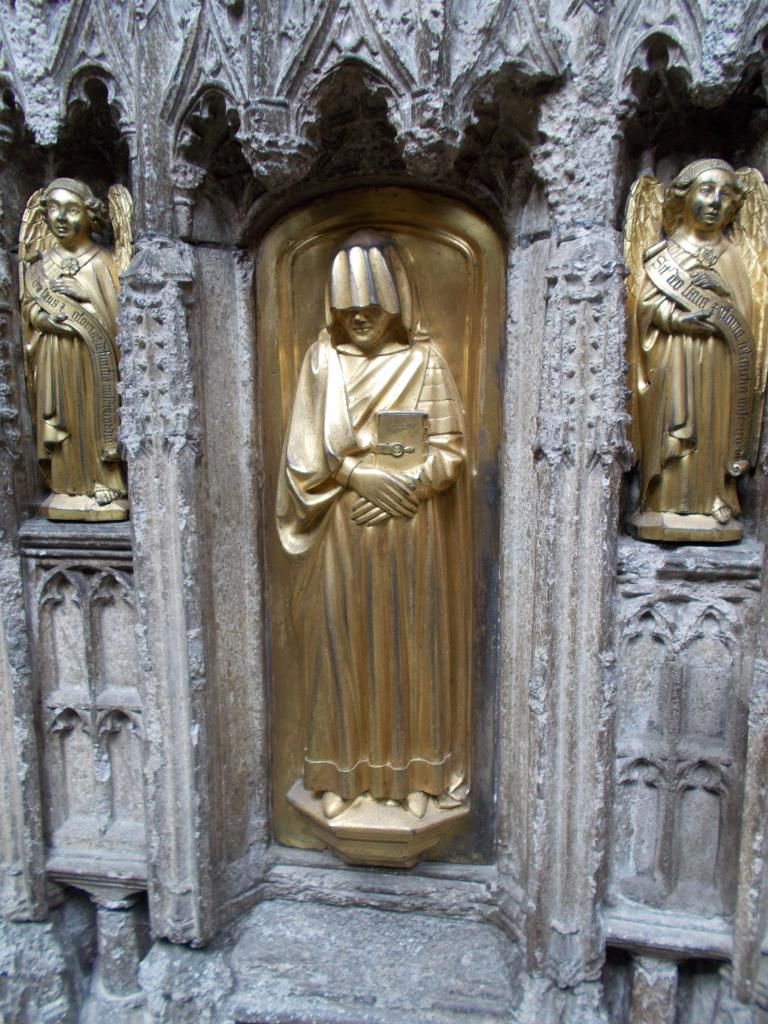
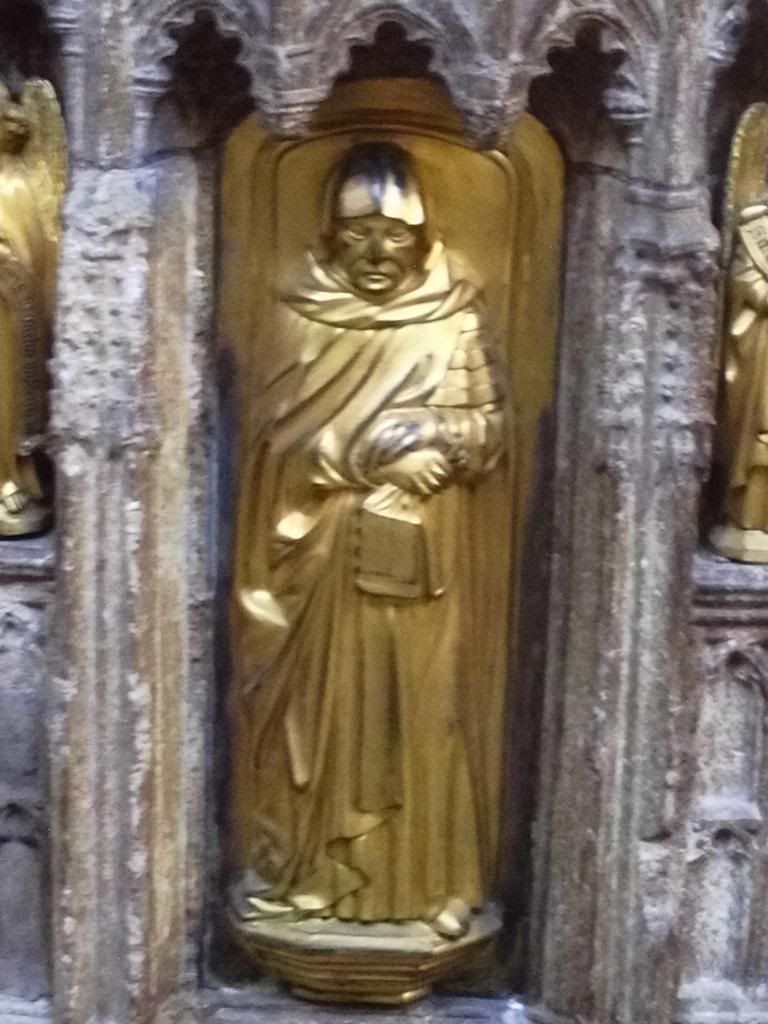
The small male and female figures seen around the base of the tomb, know as 'weepers', symbolise the real family, friends and dignities who would mourn the death of the person represented. One of them is of particular interest as it represents the only near contemporary image we have of the Kingmaker; whether it is a true likeness is impossible to say.
 
Ironically when Beauchamp's remains were finally laid to rest in 1475 most of the portrayed weepers were dead; only three, all female, were still alive. In a fitting commentary on the turbulent times when the tomb was installed all of the five male weepers shown on the south side of the monument had already suffered violent deaths.
 
From left to right the main (large) weepers represent:
  • Richard Neville, Earl of Salisbury. Younger son of Ralph Neville Earl of Westmoorland. Killed - Battle of Wakefield 1460.
  • Edmund Beaufort, Duke of Somerset. Great Grandson of King Edward III (John of Gaunt). Killed - 1st Battle of St. Albans 1455.
  • Humphrey Stafford, Duke of Buckingham. Killed - Battle of Northampton 1460.
  • John Talbot, Earl of Shrewsbury. Killed - Battle of Castillon 1453.
  • Richard Neville, Earl of Warwick and Salisbury. The 'Kingmaker'. Killed - Battle of Barnet 1474.
Richard Neville, Earl of Salisbury
 
 Arms - Humphrey Stafford, Duke of Buckingham.
 
Edmund Beaufort, Duke of Somerset
 
Arms - Edmund Beaufort, Duke of Somerset.
 
John Talbot, Earl of Shrewsbury
 
Richard Neville 'the Kingmaker'
 
The tomb was built between 1448 and 1453. Surviving contracts reveal some of the (surprising modern sounding) names:
  • William Austen of London - cast the brass effigy
  • John Bourde - supplier of the Purbeck marble
  • John Massingham - carver,
  • Barthilimew Lambespring - goldsmith
  • John Essex - marbler
  • Thomas Stevyns - coppersmith.
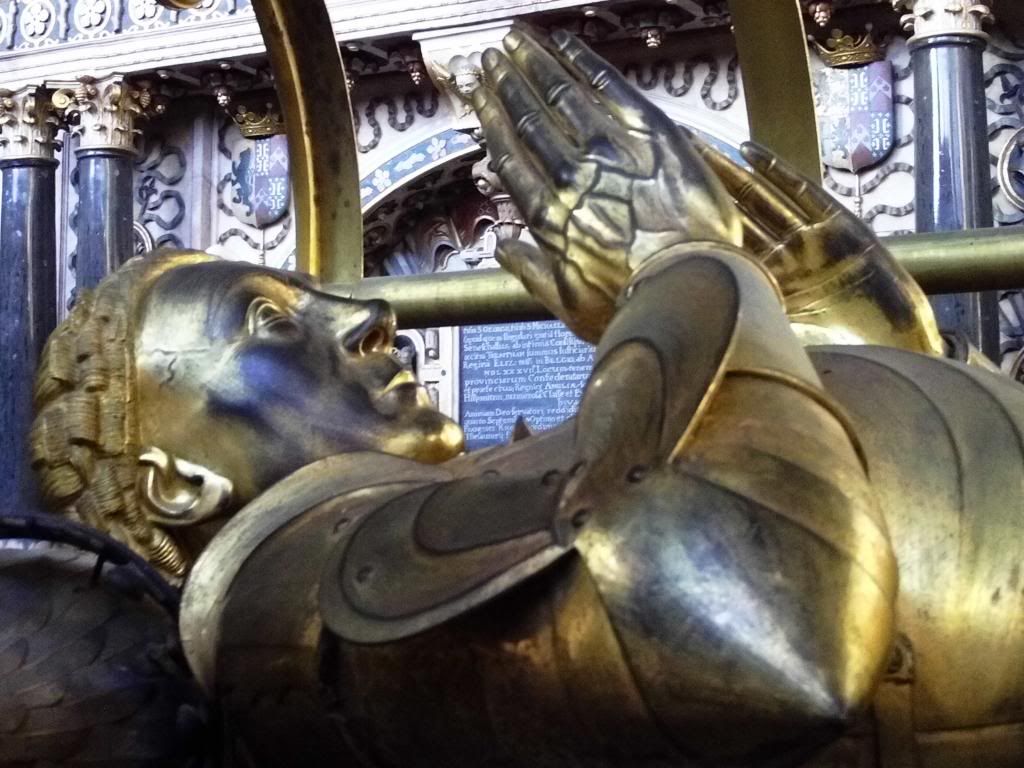
Richard Beauchamp, 13th Earl of Warwick
 
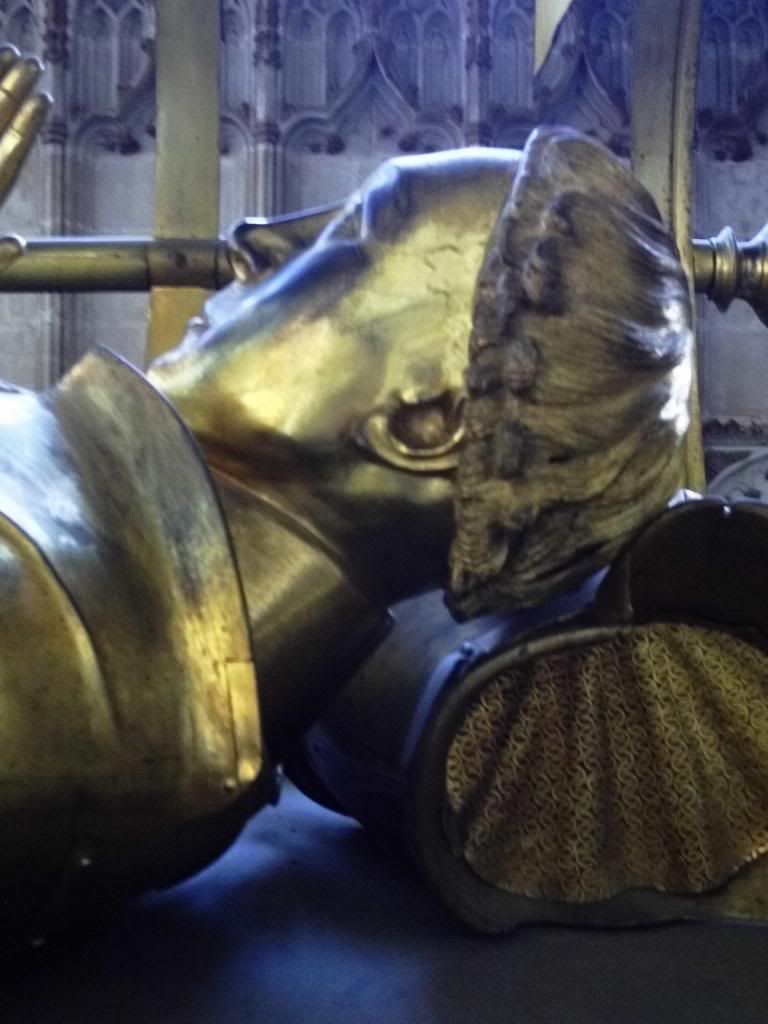
Richard Beauchamp - note the contemporary fashionable haircut
& the vein detail on the brow of the head 


Order of the Garter detail
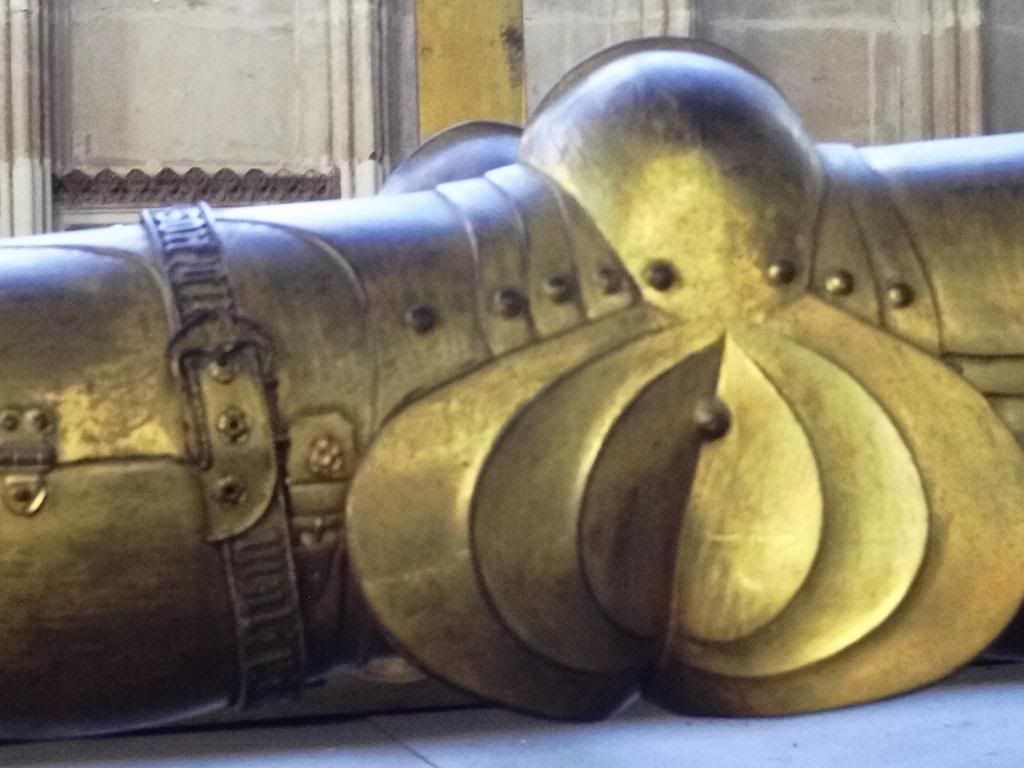
& Poleyne with fan plate detail


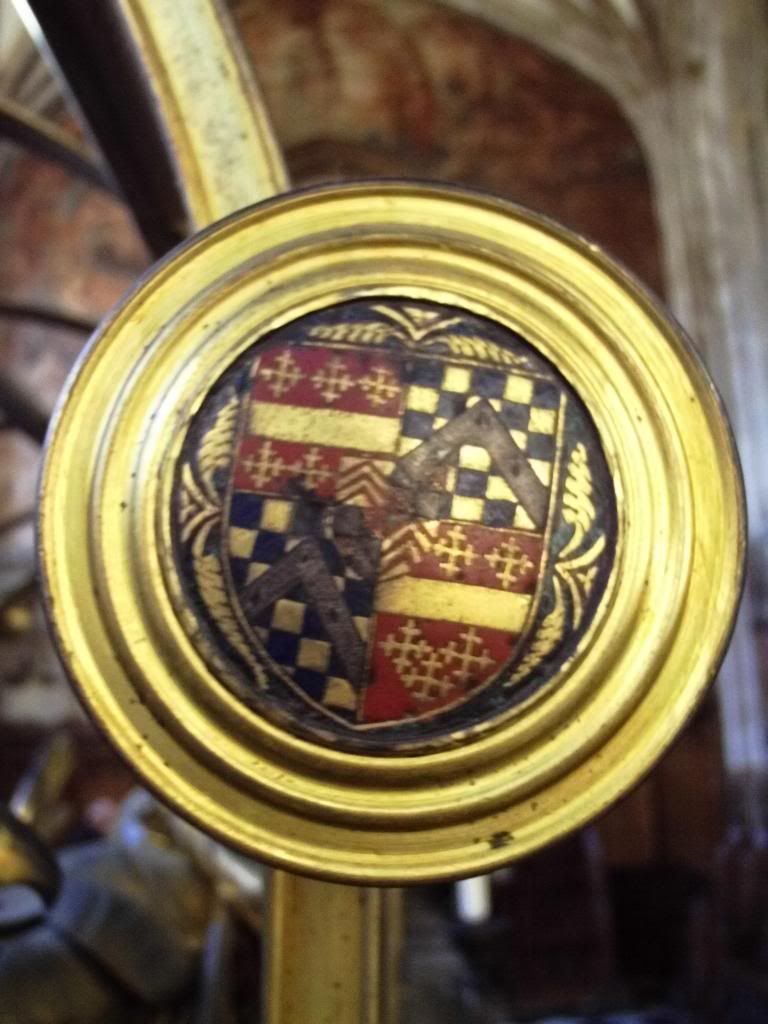
Roundel quartered with the arms of Beauchamp & Newburgh (note also the Clare arms in the forth quarter).

The chapel also houses the tombs of Robert Dudley, Earl of Leicester, his brother Ambrose Dudley, Earl of Warwick, and Robert's son, the “Noble Impe” but I'll detail these characters when I eventually finish making the WoTR retinue of John Sutton, Lord Dudley.
The nave and tower of the main church were destroyed in the great fire of Warwick in 1694. The flames only stopped short of the chapel's entrance and the walls and ceilings still reveal damage from the fire.
St. Mary's also contain numerous other points of interest including the chapel of the Royal Warwickshire Regiment (Royal Regiment of Fusiliers), an ancient ducking stool and the grave of Sir Fulke Greville, 1st Baron Brooke who was murdered at the nearby castle but I'll let you discover all these for yourself.
Thursday, 4 April 2013

Thomas Beauchamp, 11th Earl of Warwick

The Collegiate Church of Saint Mary in Warwick is a short walk from the famous castle that the town is probably best know for. As opposed to the wool churches of East Anglia this is very much a war church, built on the profits of ransoms taken during the Hundred Years Year, most notably by Thomas Beauchamp (1313 - 1369), 11th Earl of Warwick.
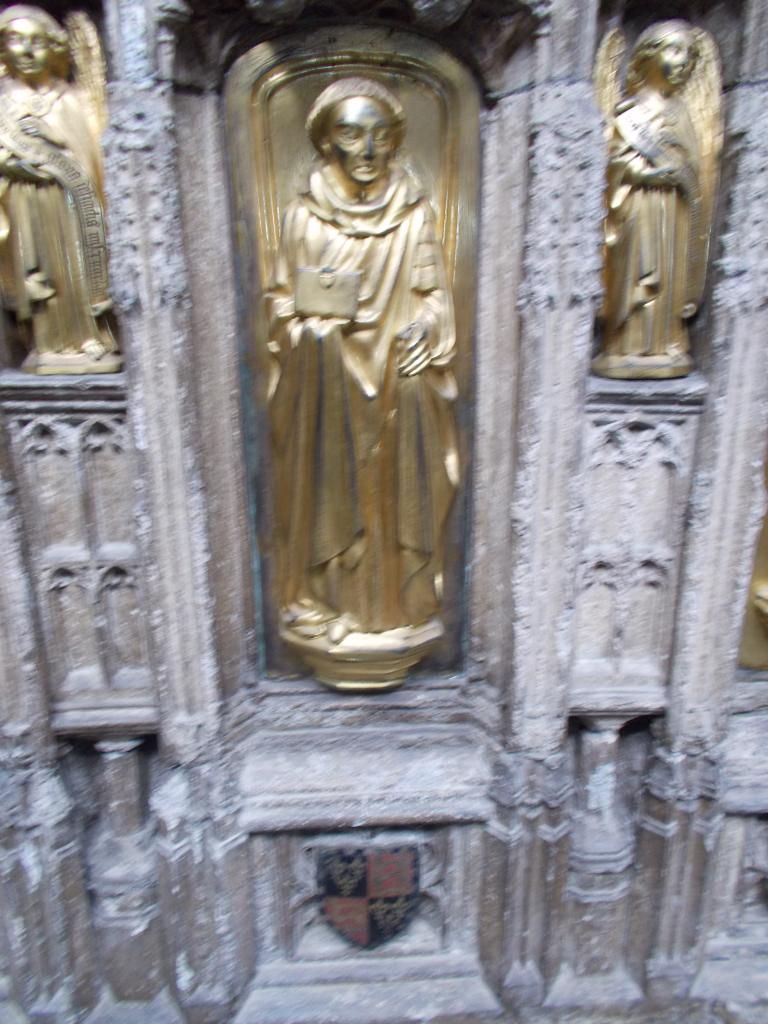
 
The church dates back to 1123 and was built by Robert de Newburgh, Earl of Warwick. The most notable remnants of this part of the church can still be still seen in the crypt.

Beauchamp was one of the most powerful English military commanders in the 14thC, he was Marshall of England for over twenty five years until 1369. Knighted aged eleven along with his brother Guy in 1345 Thomas Beauchamp went on to fight in all the French wars of King Edward III. He fought in the Black Prince's division, acting as his literal guardian, at the battle of Crécy in 1346 and ten years later commanded the vanguard and Guyennois contingent at Poitiers in 1356. At the battle of Poitiers, along with Lord Cobham, Warwick escorted the captured French King John II and the king's son Philip to safety. He was able to ransom Archbishop of Sens and the bishop of Le Mans for well over £8000, an astronomical sum at the time, using the money to rebuild the Collegiate Church of Saint Mary.

He became one of the founders, and was invested as the third Knight, of the Order of the Garter in 1348.

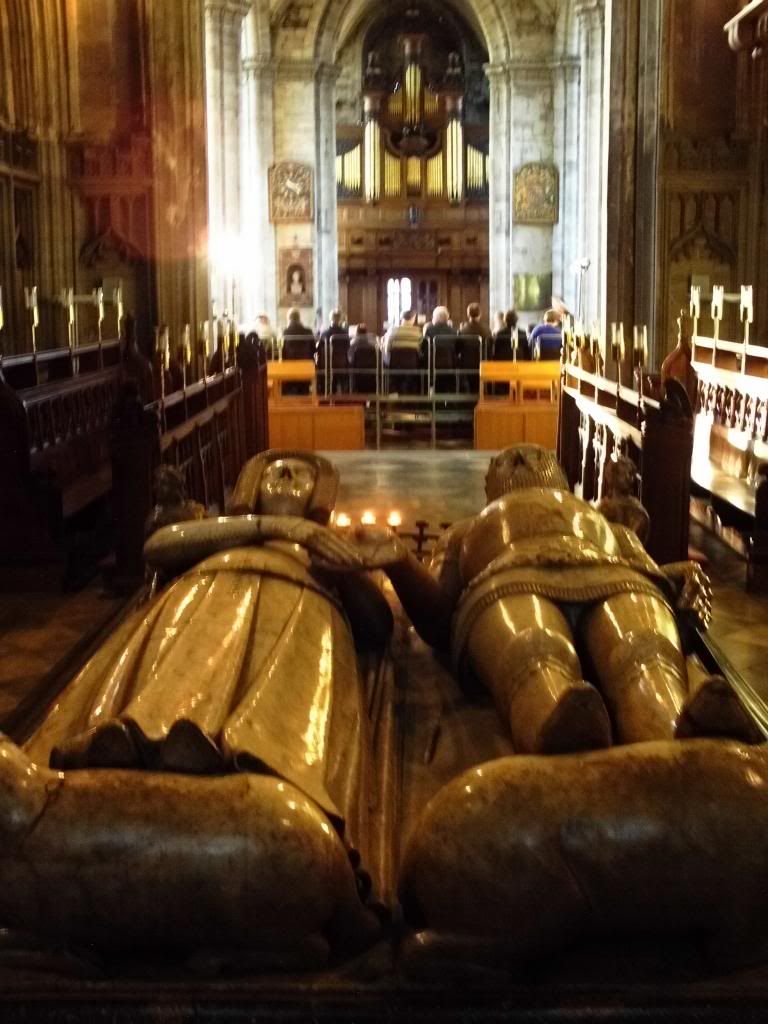
He married Katherine Mortimer, daughter of Roger Mortimer, 1st Earl of March producing five sons and ten daughters. The fact that the effigy show the couple holding hands is probably not the romantic gesture we would like to imagine today but more symbolic of two very powerful family dynasties uniting through marriage.
Thomas Beauchamp, 11th Earl of Warwick arms were: gules, a fess between six cross crosslets Or.


Beauchamp died in Calais on 13th November 1369 aged 56.

The next post will illustrate another famous occupant of this church.

Thursday, 21 March 2013

WWI re-enactment, BCLM

A few weeks ago I visited the nearby Black Country Living Museum (BCLM) specifically to see two WWI re-enactment societies (The Warwicks 1914-1918 and the The Great War Society) that attended giving displays, demos etc. My dad used to work at the museum so as a family we used to have free access to the site but I decided to pay the cash for a ticket as it is then valid for a whole year.


I've deliberately altered the photos, obviously removing the colour but I've also softened the images to try and evoke period photographs. In a style reminiscent of Stalin's photograph altering censorship I have also (very crudely) removed all the other non-costumed visitors from the photographs via the magic of computer software.


All the members I spoke to are all very knowledgeable, definitely worth seeing if them are appearing or attending at a event near you.
 
The BCLM itself provided a very atmospheric setting for the groups. The buildings at the museum have all been taken down brick by brick (literally) from the local area and then been rebuilt on this site.

Tuesday, 12 March 2013

Alumwell Wargaming Show (WMMS) 2013

What better way is there to enjoy Mother's Day than to send it buying and playing toy soldiers?

Held at the Aldersley Leisure Village in Wolverhampton the West Midland Military Show (WMMS) is only around ten miles from where I live and has a decent mix of traders, model displays, re-enactors, demo and participation games. After bring picked up by Ade and his good lady wife from IKEA we battled our way through the snow and freezing temperatures (well it was jolly cold) to arrive at the show just after midday, with my brother Neil arriving shortly afterwards. It seemed that there was a good turn out considering the weather and the fact the show coincided with Mothering Sunday. 

Armed with a shopping list I set off hot pursuit of little lead and plastic recruits. In typical fashion it was only towards the end of the day that I remembered to take any photos.

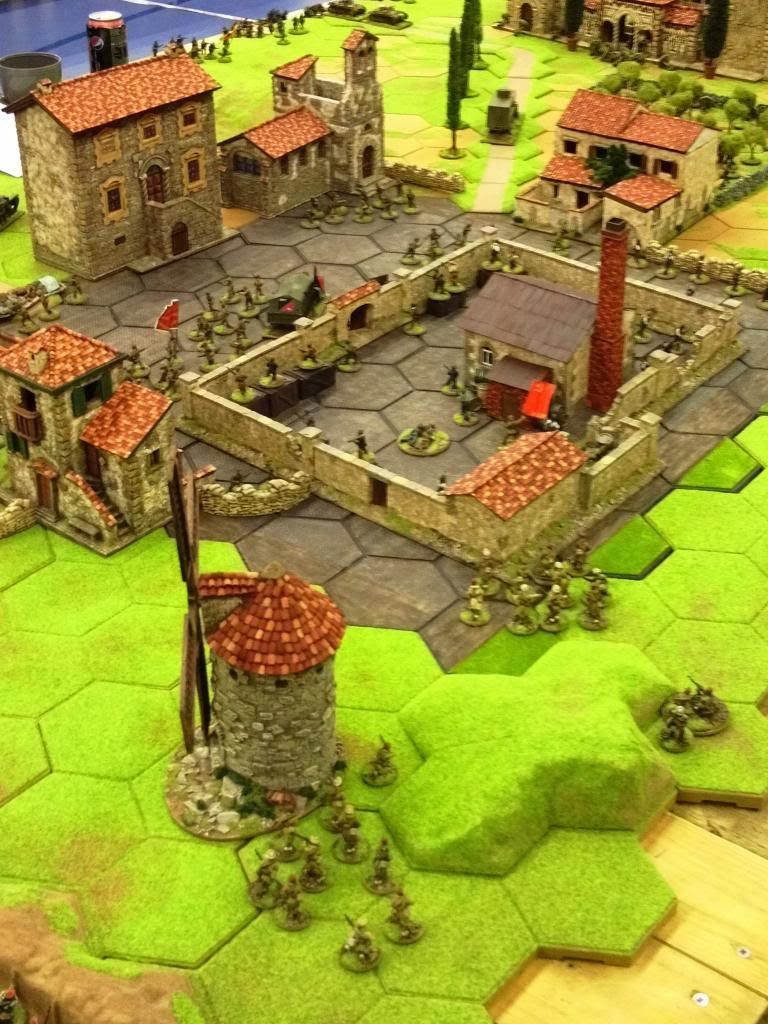
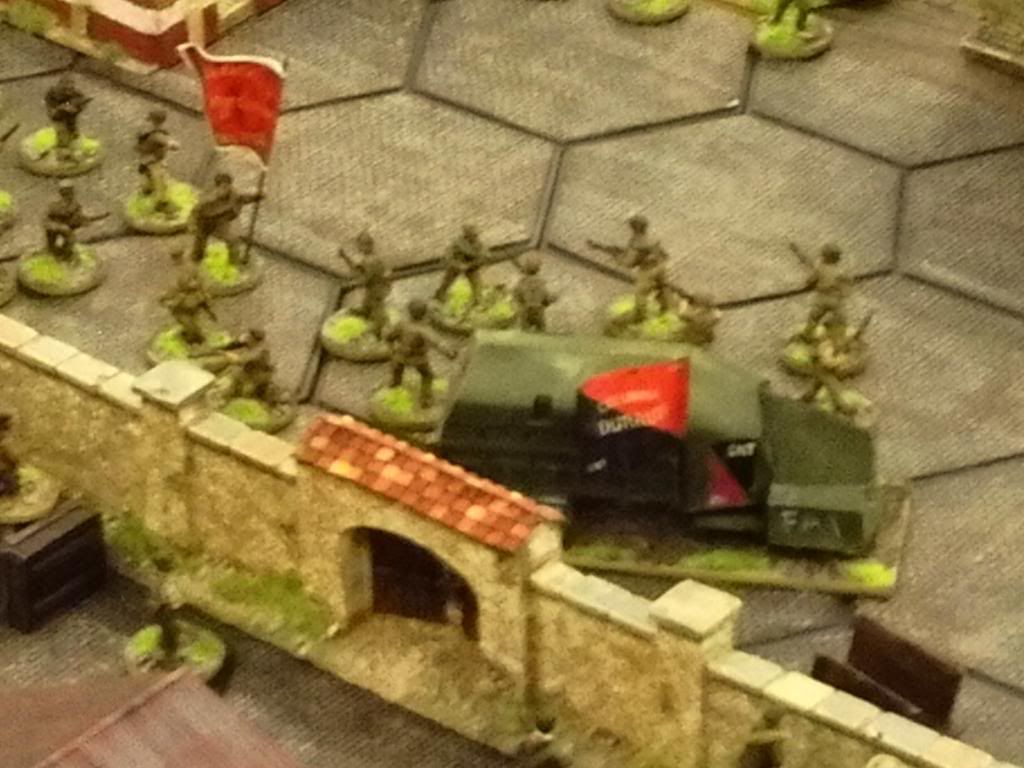
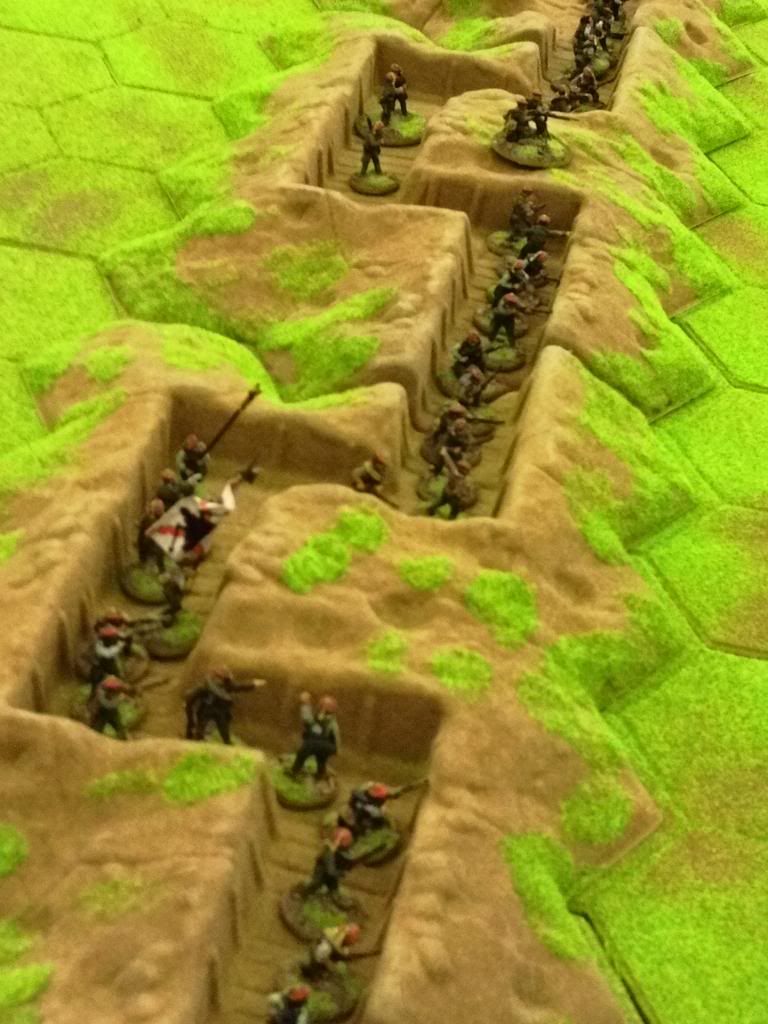
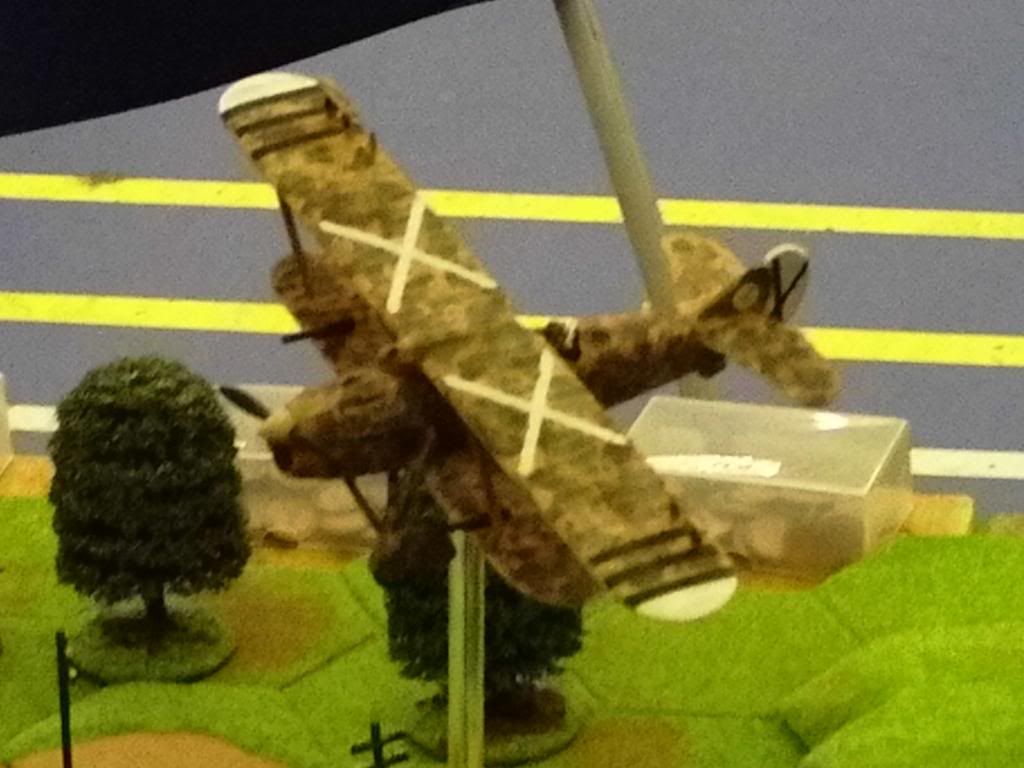
As per usual at WMMS the gamers and modellers are a friendly bunch and there were numerous games and displays that caught my eye.  I'm not normally a fan of hex based terrain but a Spanish Civil War game using Empress Miniatures figures and terrain was particularly nice.
Spanish Civil War - Empress Miniatures
 
Spanish Civil War - Empress Miniatures
 
Spanish Civil War - Empress Miniatures
 
Spanish Civil War - Empress Miniatures

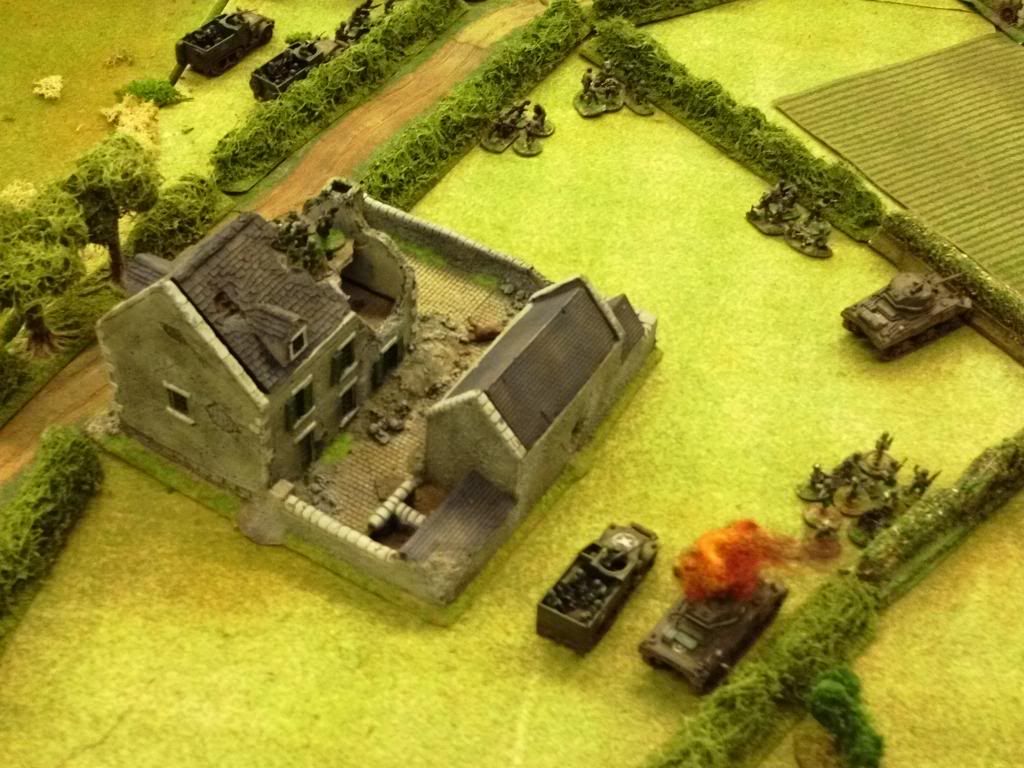
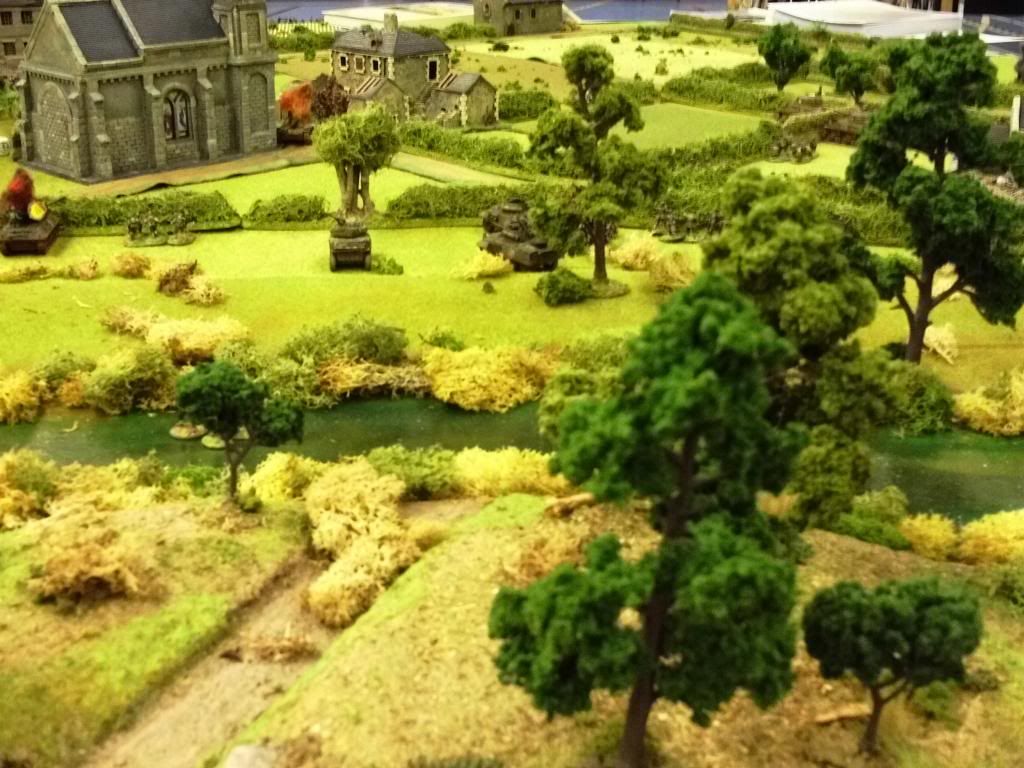
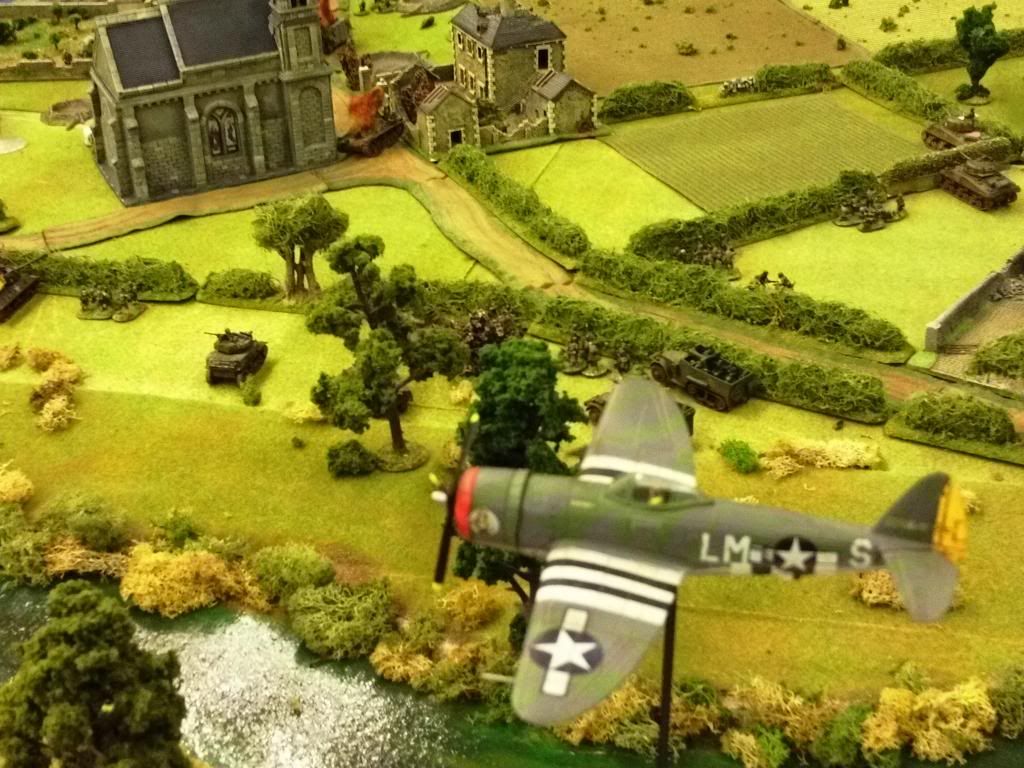
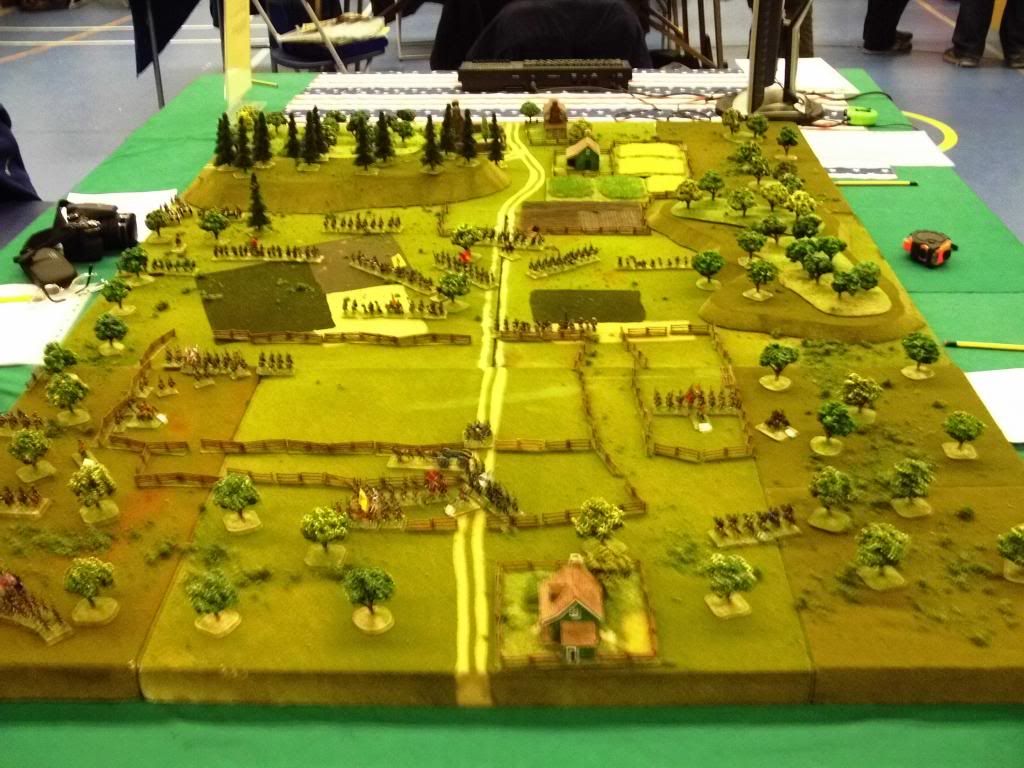
WWII demo game of Battle of Villiers Fossard
 
WWII demo game of Battle of Villiers Fossard
 
WWII demo game of Battle of Villiers Fossard
  
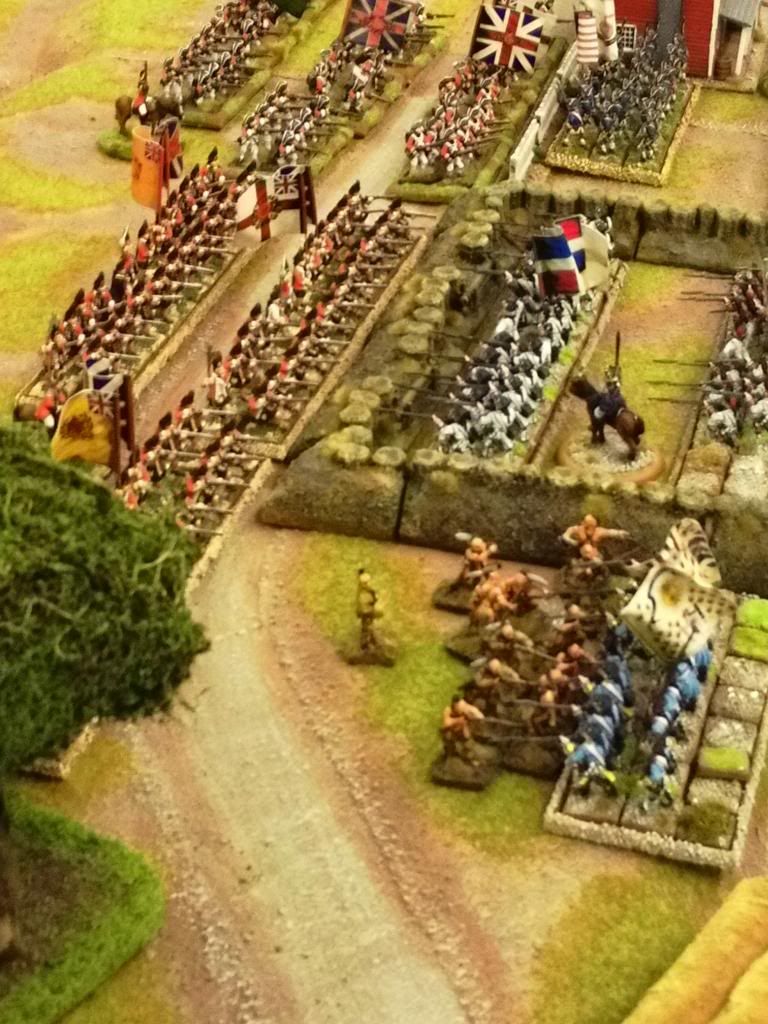
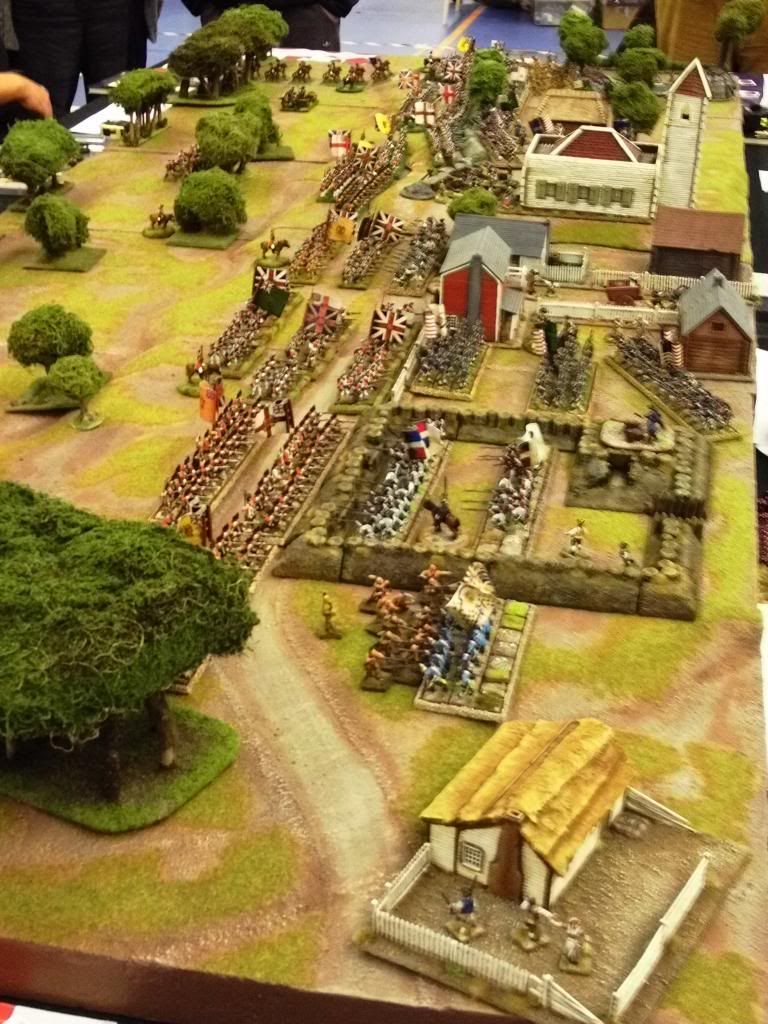
AWI game - STAGS & Questing Knight Games
AWI game - STAGS & Questing Knight Games
 
Battle of Guildford Courthouse (1781) Figures from Blue Moon

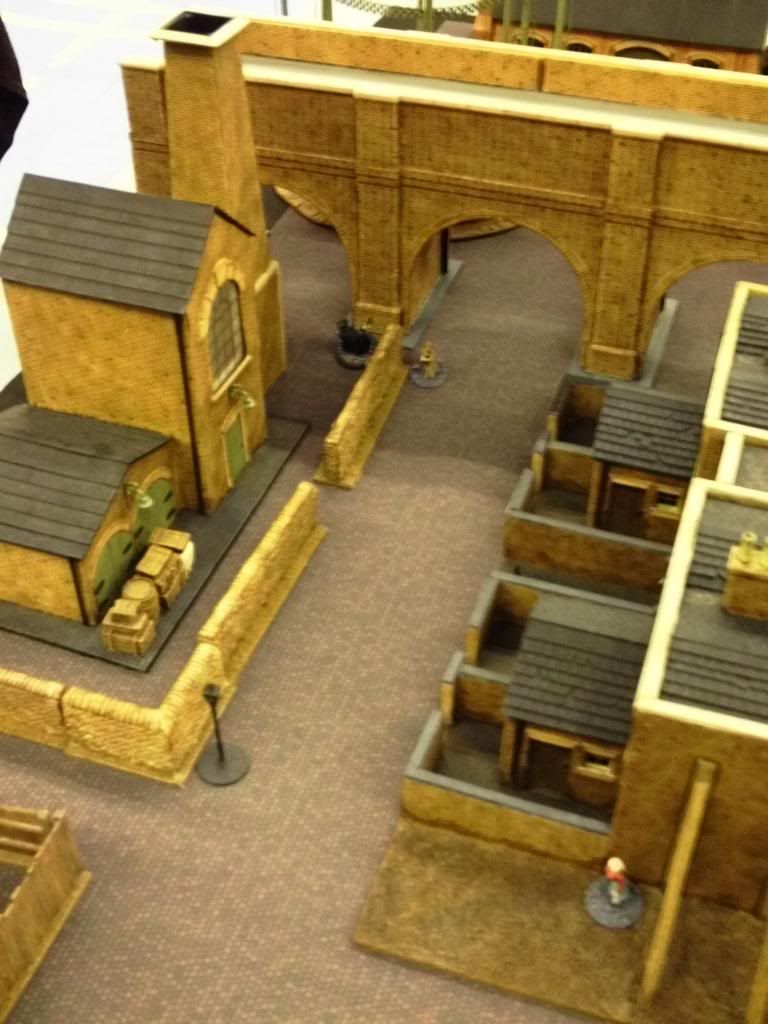
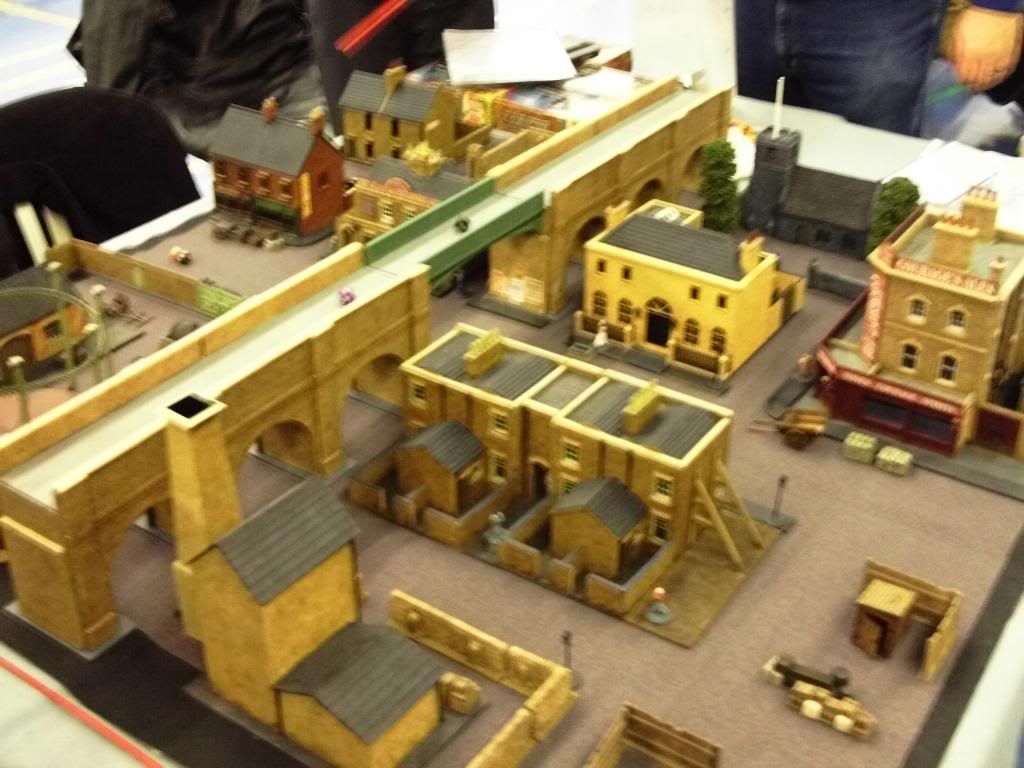
Towards the end of the day we played a very entertaining game of Sherlock Holmes and Dr. Watson (Neil and Ade of Wargaming For Fun fame) pursuing Jack the Ripper (aka 'the Butcher of Bromley-by-Bow' aka me) around the East End of London using Empire of the Dead rules from Westwind (Ade's wife Shaz didn't want to play - boo, girls are rubbish!) There was some fantastic terrain on display made by the chap running the game, Thunderchicken (not his real name I assume) which can be seen here.
 
During the game Jack managed to entice a poor cockney working girl to her doom whilst pushing the pursuing coppers further and further away (by wining several of the initiative phases) from the crime scenes as it was possible. A second victim was saved when Holmes disturbed the scene after fighting off Jack with a swing of her handbag. In the effort to make a quick getaway Jack managed to knock the bumbling Watson flat on his arse and give the smarty pants Holmes a good clip round the ear despite taking two gunshot wounds. I still lost the game though as Jack failed to secure four victims but it was good fun none the less. 
Holmes & Watson armed with their trusty red plastic pointy sticks
 
"Come here my pretty" Jack claims her first victim underneath the arches.

Super scratch-built terrain - the East End (in miniature)
 
I didn't manage to get everything I wanted on my list but I'm in no rush (especially considering my glacial painting efforts). My next show will probably be Derby which isn't until late September but which I suspect will come around all too quickly.
 
I have several posts almost ready to be published (honest) so thanks for visiting and come back soon.